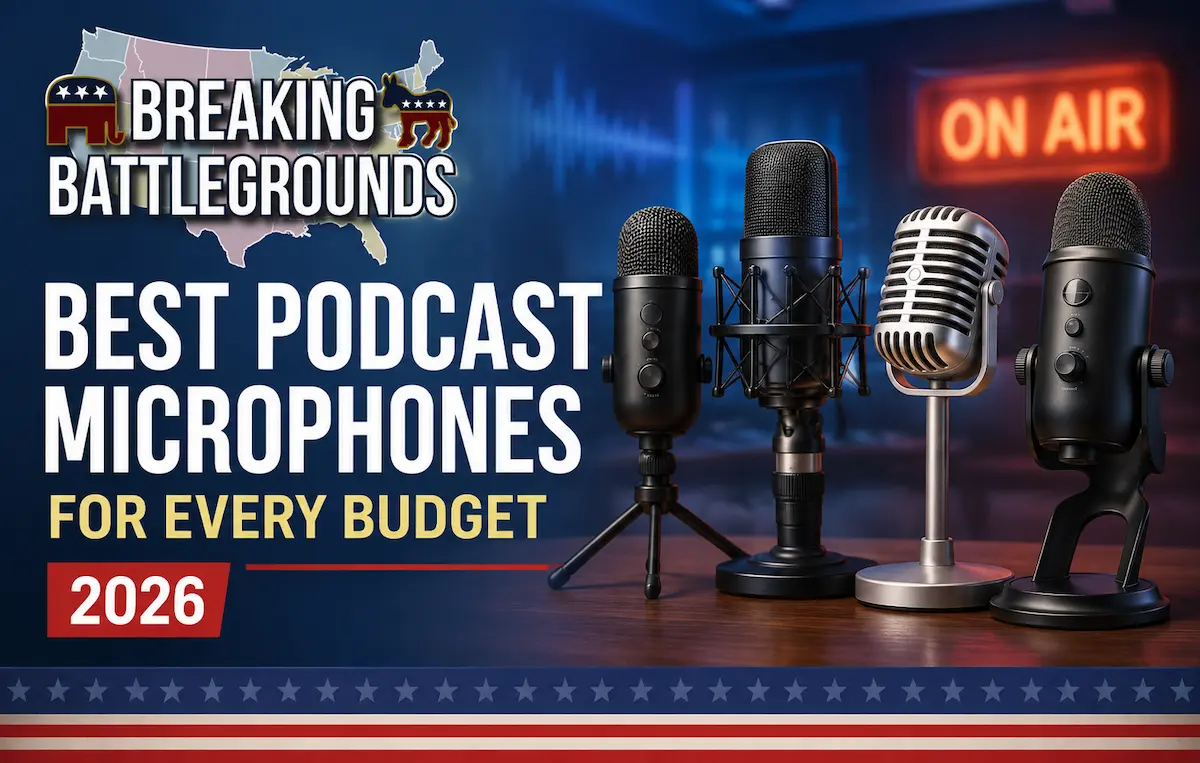
The best podcast microphone for most creators is a dynamic USB model in the $70 to $130 range, such as the Samson Q2U or Audio-Technica ATR2100x. Intermediate podcasters should step up to the Shure MV7+ or Rode PodMic, while professional studios standardize on the Shure SM7B with a clean gain booster.
Microphone marketing thrives on confusion, selling streamers’ condensers to podcasters in echoey bedrooms and $400 broadcast mics to people who have published two episodes. This guide cuts through it: which type suits a real home environment, what each budget tier honestly buys, and which popular models to skip.
Dynamic vs. Condenser: The Decision That Matters Most
Two capsule technologies dominate, and the choice matters more than the brand.
Condenser microphones are sensitive instruments that capture fine vocal detail, which is why studios with treated acoustics love them. In a normal room, that sensitivity works against you, faithfully recording wall reflections, computer fans, and traffic. The popular Blue Yeti falls in this category, and it is the single most common reason new podcasts sound echoey.
Dynamic microphones reject sound from a distance and focus on what is close to the grille. Voices sound full and broadcast-like while the room mostly disappears. Every microphone recommended below is dynamic for exactly this reason.
USB vs. XLR: Simplicity vs. Headroom
USB microphones plug straight into a computer and need nothing else. XLR microphones output an analog signal requiring an audio interface or mixer, which adds $100 to $500 to the setup but enables multi-microphone recording and finer gain control.
Solo creators and remote-interview shows lose nothing meaningful with USB. In-person multi-host shows need XLR, because two USB microphones on one computer create driver headaches that interfaces solve cleanly. Dual-output models, covered below, let you defer the choice.
Budget Tier: $70 to $130
Samson Q2U (around $70). Dynamic capsule, both USB and XLR outputs, a headphone jack for zero-latency monitoring, and included desk stand. The Q2U has been the default first microphone recommendation for a decade because nothing under $100 beats its combination of room rejection and upgrade flexibility.
Audio-Technica ATR2100x (around $100). The Q2U’s closest rival, with the same dual-output design, slightly brighter voicing, and USB-C. Choose between these two on price and availability; the differences are marginal.
Rode PodMic, XLR version (around $100). Built like a tank with a rich broadcast tone that embarrasses microphones twice its price. The catch: XLR only on the standard model, low output that wants a strong preamp, and no included stand. Buy it when an interface is already in the plan.
Mid-Range: $250 to $300
Shure MV7+ (around $280). USB-C and XLR in one body, onboard DSP with auto-level and tone presets, a touch panel, and real-time denoising. The MV7+ exists for podcasters who want SM7B character without owning an interface, and it largely delivers. Voices come through warm and controlled even in average rooms.
Rode PodMic USB (around $200). The PodMic’s broadcast sound with USB-C added, plus Rode’s internal processing. Slightly less refined software than Shure’s, slightly lower price.
This tier is the sweet spot for serious independent shows. Sound quality gains beyond it are real but small relative to cost.
Professional Tier: $400 and Up
Shure SM7B (around $400). The microphone behind most major podcasts and a half-century of radio. Smooth, dense, forgiving of untreated rooms, and nearly immune to plosives with its included windscreen. It demands roughly 60 dB of clean gain, more than most interfaces supply alone, so budget another $150 for a Cloudlifter CL-1 or choose an interface with high-gain preamps built in.
Electro-Voice RE20 (around $450). The SM7B’s great rival from American radio. Its Variable-D design keeps tone consistent as you move around the microphone, which suits animated talkers who drift off-axis. Same gain appetite, same league of quality.
Multi-host studios should buy matched microphones for every chair. Mixing models forces constant corrective EQ to make voices sit together.
Accessories That Change the Sound
A boom arm ($60 to $130) eliminates desk-thump transmitted through a table stand and holds the microphone at proper distance without crowding your workspace. A pop filter or foam windscreen ($10 to $20) tames plosives that no editing fully removes. A shock mount, included with some models, isolates handling noise.
Skip the gold-sputtered cables and isolation shields aimed at beginners. Fifty dollars of acoustic panels or moving blankets outperforms both.
Technique Beats Gear
Distance and angle do more than any purchase. Stay about a fist’s width from the grille; doubling that distance roughly doubles how much room sound enters the recording. Speak slightly across the capsule rather than dead-on to soften plosives. Set gain so your voice peaks around -12 dB, leaving headroom for laughter and emphasis.
Record ten seconds of silence before each session. That noise print makes any later cleanup dramatically more effective.
Frequently Asked Questions
Is the Blue Yeti good for podcasting?
It is a competent condenser, and that is the problem. In untreated home rooms it captures echo and background noise that dynamic microphones at the same price reject. Most podcasters get better results from a Samson Q2U at half the cost.
What microphone do most professional podcasters use?
The Shure SM7B dominates professional podcast studios, typically paired with a Cloudlifter or a high-gain interface. The Electro-Voice RE20 and Shure MV7+ are the most common alternatives.
Do I need an audio interface for a podcast microphone?
Only for XLR microphones. USB models include their own conversion, which is why they dominate beginner and solo setups.
How much should I spend on my first podcast microphone?
Between $70 and $130. The dual-output models in that range produce sponsor-ready audio and survive every future upgrade, making more expensive first purchases unnecessary.
Buy dynamic, buy dual-output if undecided, and let the show’s growth justify each step up the ladder. A $70 microphone with good technique beats a $400 microphone with bad habits every single episode.