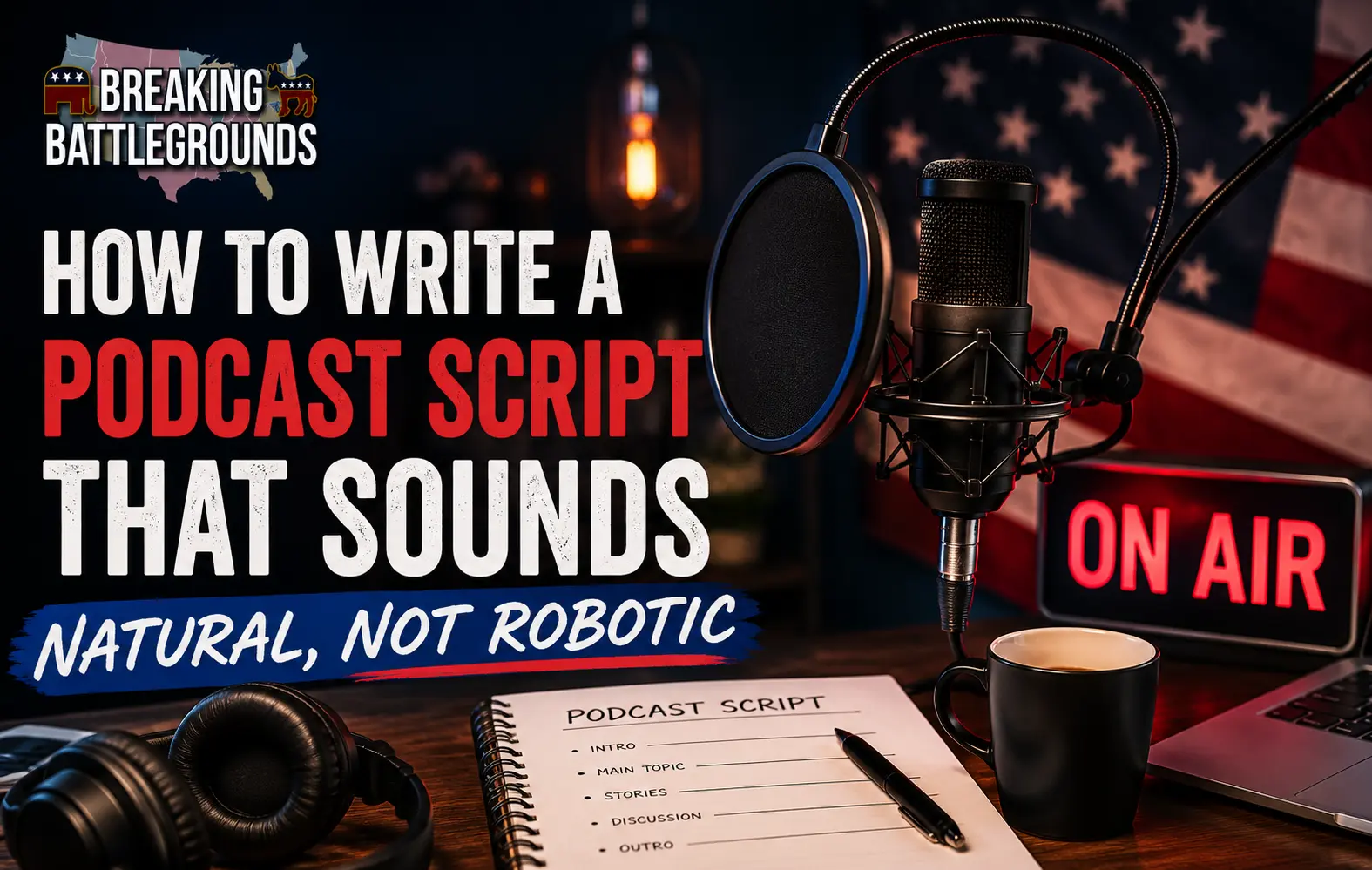
The biggest listener complaint about scripted podcasts isn’t too little preparation it’s too much. When hosts read a full script word for word, the natural rhythm of speech disappears, and audiences notice immediately. The goal of a podcast script isn’t to eliminate spontaneity; it’s to make sure you never lose the thread of an episode while still sounding like yourself.
Do You Actually Need to Script Your Podcast?
It depends entirely on format. Solo shows, news breakdowns, storytelling, essay-style episodes, benefit from a tighter script because there’s no second voice to keep the energy moving if you lose your place.
Interview and conversational shows, on the other hand, do best with a loose outline rather than a script. The value of these formats is the unscripted back-and-forth; over-scripting kills exactly what makes them worth listening to.
The Podcast Script Structure That Works
Regardless of format, almost every well-produced episode follows the same four-part shape.
- Cold open / hook — script this one word for word. You have about 15 seconds before a listener decides whether to keep going.
- Intro — write this once as a reusable template: show name, hosts, one-line description of what the episode covers.
- Body — bullet-pointed talking points and transition phrases, not full sentences. Note the questions you must ask, not how the guest will answer them.
- Outro — script your call-to-action word for word so you never forget to ask people to subscribe, follow, or leave a review.
A Simple Podcast Script Template
Use this structure as a starting point for any episode:
- [COLD OPEN] One striking line, question, or clip that previews the episode’s core idea.
- [INTRO] Show name + hosts + today’s topic in one sentence.
- [SEGMENT 1] 3–4 bullet points of what you’ll cover, plus any stat or quote you want to hit exactly.
- [SEGMENT 2] Same structure — bullets, not paragraphs.
- [TRANSITION LINES] Write 2–3 stock phrases you can use to move between segments naturally.
- [OUTRO] Recap in one sentence + subscribe/follow CTA + where to find the show.
How to Write a Podcast Intro Script
Keep your intro under 30 seconds. State who you are, what the show is about, and why today’s episode matters in that order. Write it once, save it as a template, and reuse it every episode so editing stays fast and your branding stays consistent.
Common Podcast Scripting Mistakes
- Reading word for word and sounding flat as a result the single most common listener complaint.
- No timing cues, so segments run long and episodes lose structure.
- A weak or missing hook in the first 15 seconds, which is where most listener drop-off happens.
- Scripting guest answers on an interview show instead of just your own questions.
Frequently Asked Questions
What's the difference between a podcast script and an outline?
A script includes exact wording meant to be read closely to verbatim. An outline lists the topics, questions, and talking points in order, but leaves the actual phrasing to happen live. Most conversational shows use outlines; narrative or solo shows lean more on scripts.
How long should a podcast script be?
For a 30-minute episode, expect roughly 3,500–4,500 words if fully scripted, or a one-to-two-page bullet outline if you’re using the looser format most interview shows rely on.
Should beginners write full scripts?
It’s reasonable to script more heavily in the first few episodes while you’re finding your voice, then gradually shift to an outline as you get comfortable speaking without a script in front of you.
Do professional podcasters use scripts?
Most use a hybrid: a fully scripted intro and outro for consistency, with an outline for everything in between. Very few top shows read a full script for the entire episode.
A good podcast script isn’t about controlling every word it’s about making sure you never have to think about structure while you’re recording. Script the parts that need to be exact (your hook, your intro, your call-to-action) and outline the rest. That balance is what lets a show sound both professional and genuinely like a conversation.