Guest release forms are one of the most skipped steps in independent podcasting, usually because a friendly conversation doesn’t feel like it needs paperwork. In practice, most disputes between podcasters and guests happen precisely because there was no clear written agreement about what could be published, edited, or reused, not because anyone acted in bad faith.
What a Podcast Release Form Should Cover
At minimum, a basic release form should address the following points clearly.
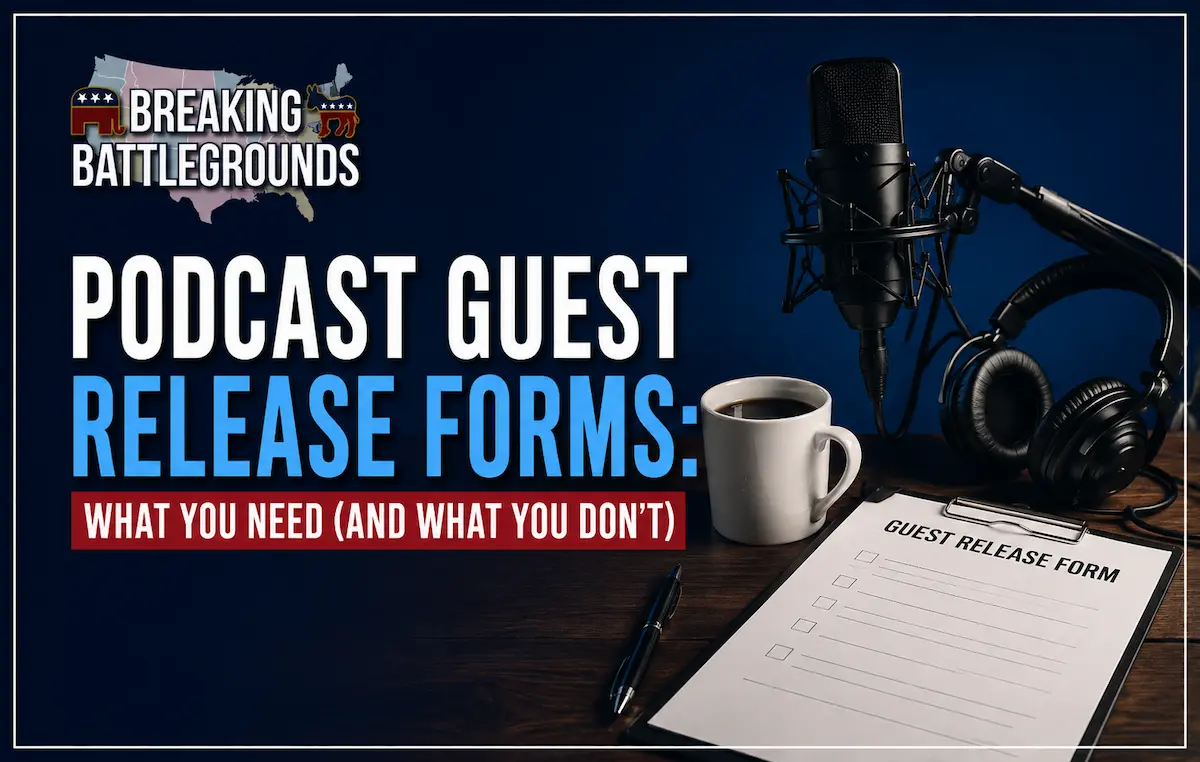
- Permission to record, edit, and publish the conversation across your podcast’s distribution platforms
- Whether the guest has any right to review or request edits before publication
- Whether clips can be used separately for promotion (social media, trailers, ads for the episode)
- Whether any compensation is involved, and if so, the terms
- How long the permission lasts, most releases grant ongoing rights rather than a one-time use
Do You Legally Need a Release Form?
Requirements vary by jurisdiction and specific circumstances, and this isn’t legal advice, for anything beyond a casual, low-stakes conversation, it’s worth having an actual attorney review your specific release language. That said, having some form of written or recorded verbal consent is common practice across the podcasting industry, particularly once sponsorships or advertising revenue are involved.
Verbal vs. Written Consent
Many podcasts rely on recorded verbal consent at the start of an episode (“You’re okay with this being recorded and published, correct?”) rather than a formal signed document, particularly for casual or informal shows. Written consent is generally considered stronger protection, especially for shows with any commercial component, but recorded verbal agreement is far better than no documentation at all.
When a Formal Release Form Matters Most
Formal written releases become more important when a show has sponsors or advertising revenue tied to specific episodes, guests are public figures or industry professionals with reputational concerns, sensitive or potentially controversial topics are being discussed, or clips will be repurposed extensively across social platforms beyond the original episode.
Frequently Asked Questions
Is a podcast guest release form legally required?
It depends on jurisdiction and specific circumstances this isn’t legal advice, and it’s worth having an attorney review your specific situation. In practice, many podcasts operate on recorded verbal consent, though written releases offer stronger protection.
What should a basic podcast release form include?
Permission to record and publish, whether the guest can request edits, whether clips can be used for promotion separately, any compensation terms, and how long the permission lasts.
Is recorded verbal consent enough?
It’s common practice for many podcasts, especially casual or informal shows, but it offers weaker protection than a written release, particularly if the conversation becomes commercially significant or controversial later.
Do I need a release form for every guest?
Most podcasters use some form of consent, verbal or written for every guest, reserving fully formal written releases for higher-stakes situations like sponsored episodes or public-figure guests.
A release form isn’t about assuming bad faith from guests, it’s about removing ambiguity before it becomes a problem. At minimum, get clear recorded verbal consent for every episode; for anything involving sponsorship, sensitive topics, or public-figure guests, a written release and a quick conversation with an attorney is worth the extra step.