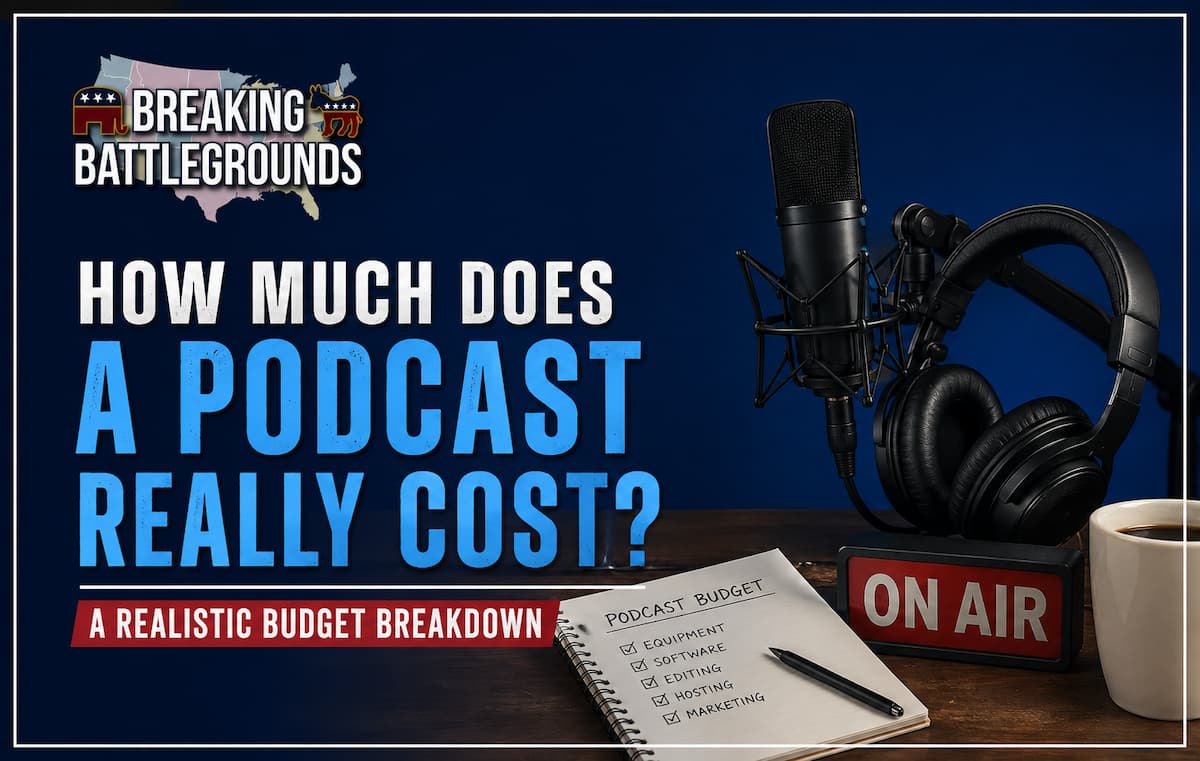
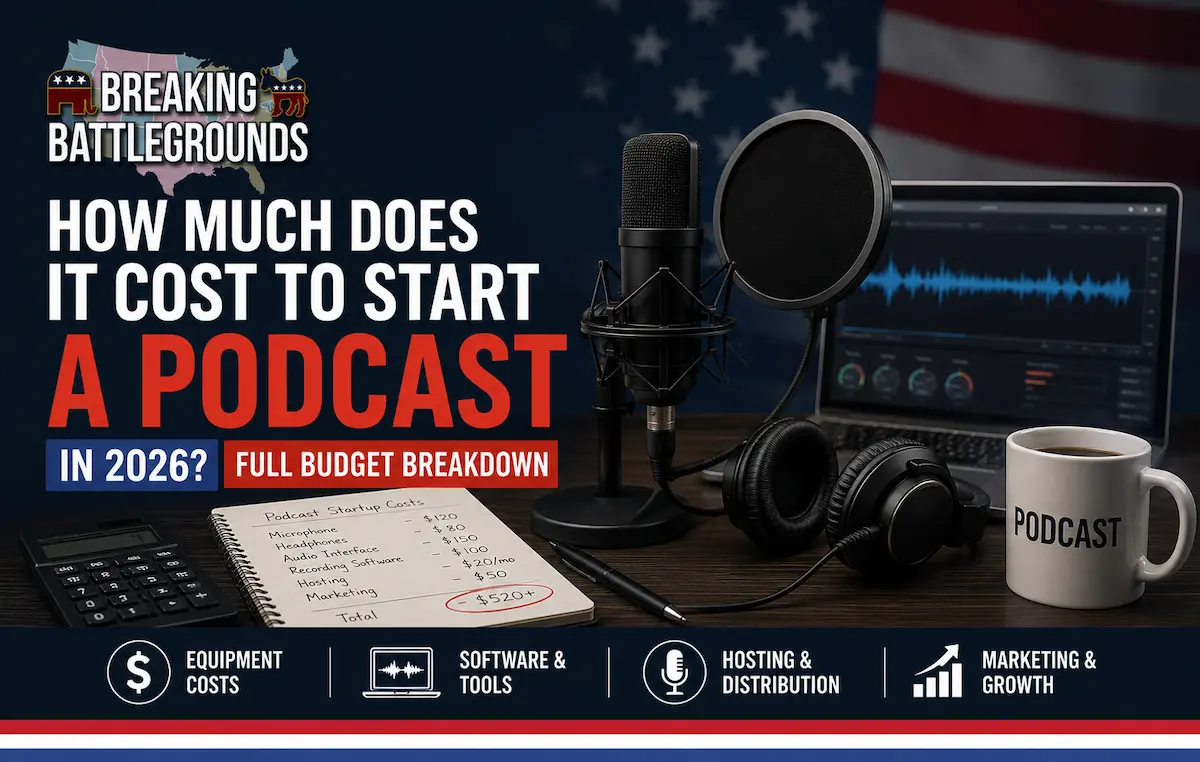
Starting a podcast costs between $0 and $5,000 depending on ambition, with most independent creators landing at $200 to $600 for the first year. A workable minimum setup runs about $100 for a microphone plus $15 monthly hosting, while professional multi-host video studios reach several thousand dollars.
Budget questions deserve real numbers, not vague reassurance, so this guide prices four complete tiers and itemizes the recurring costs that outlast every equipment purchase. The pattern worth knowing in advance: podcasting is cheap to start, cheap to run, and expensive only when scaling video or paying for time you currently donate.
The True Zero-Dollar Setup
A genuinely free podcast is possible today. Record on the smartphone you own, in a closet or carpeted room, using a free recorder app. Edit in Audacity or GarageBand, both free and fully capable for spoken word. Host on a free hosting tier, accepting its caps and limitations, and distribute to every directory at no charge.
Free hosting carries the real compromises: monthly upload limits, ads inserted into your show, restricted analytics, and weaker feed control. The audio compromise of phone recording is smaller than expected when the room is quiet and the phone sits close.
Zero-dollar setups exist to answer one question: will you actually publish consistently? Spend nothing until episode five proves the habit.
Starter Tier: $100 to $250 for Year One
The first paid tier buys the two things that matter most, a dynamic microphone and proper hosting.
Equipment runs $80 to $130: a Samson Q2U or Audio-Technica ATR2100x with a foam windscreen, plus basic wired headphones if none are on hand. Hosting at $10 to $20 monthly adds $120 to $240 yearly, bringing year-one totals to roughly $200 to $370.
Software stays free at this tier, and cover art comes from Canva’s free plan or a $50 to $100 freelance commission. This budget produces audio quality indistinguishable from shows charging sponsors real money, which is why it is the recommended starting point for nearly everyone.
Intermediate Tier: $500 to $1,200
Shows past episode twenty with growth ambitions typically add four upgrades.
A better microphone chain comes first: a Shure MV7+ around $280, or a Rode PodMic with a Focusrite interface totaling about $300. A boom arm at $60 to $130 and four to six acoustic panels at $60 to $120 fix the physical setup. Remote recording software for guest shows adds $15 to $30 monthly. Editing software upgrades, Descript or similar AI-assisted tools, run $12 to $24 monthly for creators who value the time savings.
Annualized, this tier lands between $500 and $1,200 including recurring costs, and it is where most serious independent podcasts equilibrate for years.
Professional Tier: $2,000 to $5,000 and Beyond
Multi-host studios and video podcasts drive the top tier. Two to four Shure SM7B microphones with a Rodecaster Pro II console run $1,500 to $2,500. Cameras transform the budget: two mirrorless bodies suitable for video podcasting add $1,400 to $2,000, with lighting at $200 to $500 on top.
Services scale the recurring side. Professional editing runs $50 to $200 per episode, production agencies $500 to $2,000 monthly, and original theme music $100 to $500 once. Companies launching branded podcasts routinely spend $10,000 to $25,000 for launch packages, a useful benchmark for what the ceiling looks like.
Nobody needs this tier to start, and buying it before an audience exists is the most common money mistake in the medium.
Recurring Costs: The Budget That Actually Matters
Equipment is bought once; these renew forever. Hosting at $120 to $360 yearly. Remote recording at $0 to $360. Editing software at $0 to $300. A website and domain at $20 to $200. Music licensing at $0 to $180. Realistic annual operating costs for an independent show: $150 on the floor, $400 to $800 in the comfortable middle, $1,500 with premium tools throughout.
Time remains the largest unbilled cost. A weekly interview show consumes six to ten hours per episode across the full workflow; at any reasonable hourly value, the labor dwarfs every cash line above it. Tools that cut editing hours often beat equipment upgrades on pure return.
Where Spending Pays and Where It Burns
Three purchases consistently return their cost: a dynamic microphone over a laptop mic, room treatment over microphone upgrades, and a reliable host with real analytics over free tiers. Reviews, sponsors, and listeners all respond to these.
Three purchases consistently disappoint early: video gear before an audio audience exists, multi-channel mixers for solo shows, and paid promotion for a show without retention data. Each spends real money solving a problem the show does not yet have.
Frequently Asked Questions
Can I start a podcast with no money?
Yes, using a smartphone, free editing software, and a free hosting tier. The constraints are hosting limits and rougher audio, both acceptable for proving the habit before spending.
What is a realistic first-year podcast budget?
Between $200 and $600 covers quality equipment and proper hosting for most solo and interview shows. Multi-host and video formats push budgets toward $1,500 and beyond.
Is podcast hosting really necessary?
Yes. Hosting stores your audio and generates the RSS feed every directory reads; without it, there is no show on Spotify or Apple. Budget $10 to $20 monthly for a host with solid analytics.
How much do podcasters spend on editing?
Self-editors spend $0 to $300 yearly on software. Outsourced editing runs $50 to $200 per episode, the first major expense most growing shows take on.
Start at the tier matching your proof, not your ambition: free to test, $200 to commit, more only when the show itself demands it. The microphone never made a podcast succeed, and the budget never killed one that published every week.