So, you’re thinking about using AI voices for your podcast? It’s a hot topic right now, and honestly, it’s changing how people make audio content. We’re talking about making episodes faster, maybe even in different languages, and potentially reaching more people. But, it’s not all smooth sailing. There are some big questions about ethics, legality, and whether it truly sounds, well, *human*. Let’s break down if Podcasting with AI Voices is actually worth the hype.
Key Takeaways
AI voice technology can make podcast production quicker and more consistent, allowing creators to generate content efficiently.
Using AI voices can help podcasts reach a wider audience through multilingual capabilities and improved accessibility.
It’s super important to get permission before cloning someone’s voice and to be upfront with your listeners about using AI.
While AI offers speed, human editing provides emotional depth and a personal touch that can be hard for AI to replicate.
A mix of AI for speed and human touch for polish might be the best way forward for many podcasters.
Understanding AI Voice Cloning for Podcasting
Defining AI Voice Cloning Technology
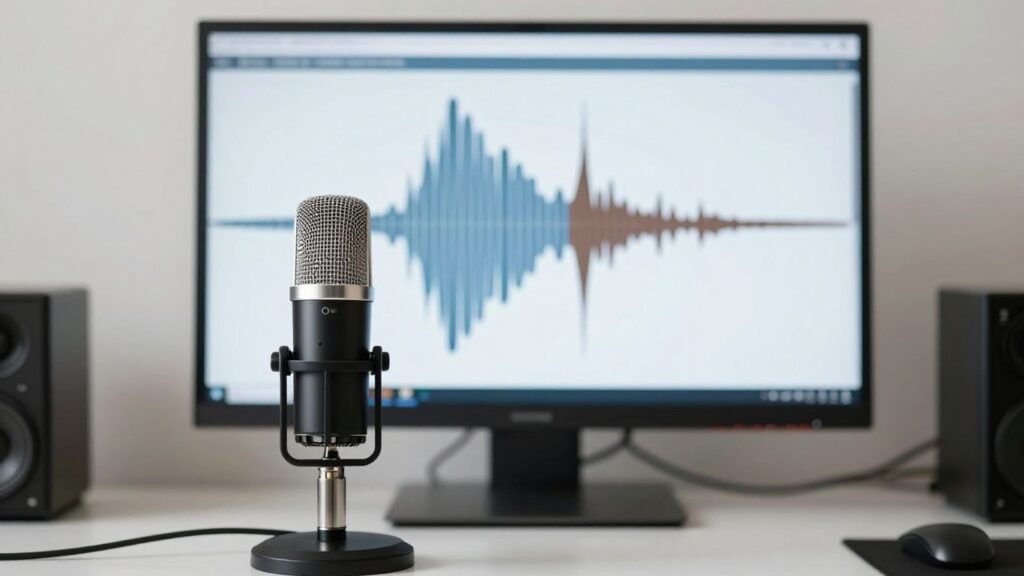
AI voice cloning is a technology that uses machine learning to create a synthetic version of a human voice. It works by analyzing a significant amount of audio data from a target voice to learn its unique characteristics, such as pitch, tone, cadence, and accent. Once trained, the AI can then generate new speech that sounds remarkably similar to the original speaker, all from text input. This process allows for the creation of audio content without the need for the original person to record every word. The ability to replicate human speech with such accuracy is what makes AI voice cloning a game-changer for content creation. It’s not just about mimicking sounds; it’s about capturing the subtle nuances that make a voice sound natural and engaging.
Key Features of AI Voice Generation Tools
Modern AI voice generation tools come with a range of features designed to make content creation more efficient and flexible. Many platforms allow you to upload existing audio samples to create a custom voice profile. Others offer a library of pre-made, high-quality voices that you can use immediately. Some advanced tools even let you adjust parameters like emotion, speed, and emphasis to fine-tune the output. These tools can be incredibly useful for tasks like generating intros and outros, correcting minor errors in recordings, or even creating entirely new spoken content. The goal is to provide creators with a versatile toolkit for their audio needs.
The Role of Machine Learning in Voice Replication
At the heart of AI voice cloning lies machine learning, specifically deep learning models. These models are trained on vast datasets of human speech. Through complex algorithms, they learn to predict the next sound or word based on the preceding audio and the input text. The more data the model is fed, the better it becomes at replicating the subtle inflections, pauses, and emotional tones that define a natural human voice. This continuous learning process is what allows AI voices to become increasingly indistinguishable from their human counterparts over time. It’s a sophisticated process that mimics how humans learn to speak and understand language, but at a vastly accelerated pace.
Advantages of Podcasting with AI Voices
Using AI voices in podcasting can really change how you make and put out episodes. It’s not just about sounding like a robot; modern AI can create voices that are surprisingly natural. This opens up a lot of doors for creators, especially those looking to speed things up or reach more people.
Enhancing Production Efficiency and Speed
One of the biggest wins with AI voices is how much time and effort they save. Instead of booking studio time, waiting for guests, or re-recording lines because of mistakes, AI can generate narration almost instantly. You can take a script and have a voiceover ready in minutes, not hours or days. This means you can publish episodes more often, keeping your audience engaged without the usual production bottlenecks. It’s like having a tireless narrator on demand.
Achieving Voice Consistency Across Episodes
Ever had a host get sick or a guest drop out mid-series? With AI, you can maintain a consistent voice and tone throughout your entire podcast, no matter what. This is great for maintaining brand identity or a specific show feel. Listeners often connect with a familiar voice, and AI ensures that voice is always there, sounding just right, every single time. This consistency builds listener familiarity and trust over time.
Expanding Reach Through Multilingual Capabilities
AI voice technology makes it much easier to take your podcast global. You can translate your scripts into different languages and then use AI to generate narration in those languages, all using a consistent voice profile. This allows you to connect with audiences in their native tongue without needing to hire multiple voice actors or translators for every language. It’s a powerful way to grow your listenership internationally.
Improving Accessibility for Diverse Audiences
AI voices can also play a role in making podcasts more accessible. For example, individuals who have difficulty speaking or who have lost their voice might be able to use a personalized AI voice to create their own content. Furthermore, providing transcripts and audio versions generated by AI can help listeners with hearing impairments or those who prefer to consume content audibly while multitasking. This inclusivity broadens the potential audience for any podcast.
The ability to quickly generate and iterate on audio content means creators can experiment more freely with different formats and topics. This rapid prototyping, powered by AI, can lead to discovering new audience interests and refining content strategies more effectively than traditional, slower production cycles.
Here are some key benefits:
Time Savings: Dramatically reduces recording and editing time.
Cost Reduction: Lowers expenses related to voice talent and studio time.
Scalability: Enables production of more content at a faster pace.
Consistency: Maintains a uniform vocal quality and style across all episodes.
This technology can be particularly useful for repurposing existing content, such as turning blog posts into audio articles or creating short clips for social media. For instance, tools can help repurpose podcast content into various formats, saving creators significant effort.
Navigating Ethical and Legal Considerations
Using AI voices in your podcast isn’t just about the tech; it’s also about being responsible. When you start cloning voices or generating new ones, you’re stepping into some tricky territory. It’s really important to think about who owns the voice and how it’s being used. Getting permission is the absolute first step.
The Importance of Explicit Consent
Before you even think about cloning someone’s voice, you must get their clear, written permission. This isn’t a casual ‘yeah, sure’ situation. It needs to be explicit, meaning they understand exactly what you plan to do with their voice and they agree to it. Without this, you could be looking at legal trouble. Think about it like using someone’s photo without asking – it’s a violation of their rights. For podcasters, this means having a solid agreement in place, especially if you’re using a voice actor’s likeness or even your own if you plan to use it in ways you didn’t originally record it for.
Mitigating Risks of Misinformation and Impersonation
AI voices can sound incredibly real, which is great for production, but it also opens the door for misuse. Someone could use a cloned voice to spread false information or pretend to be someone they’re not. This is often called ‘deepfake audio.’ As a podcaster, you have a responsibility to make sure your content is truthful. You can’t just generate a fake quote from a public figure and pass it off as real. It’s about maintaining the integrity of your show and not contributing to the spread of lies. Being transparent about your use of AI is a big part of this. You can find tools that help streamline content creation, but they don’t absolve you of the responsibility for the content itself.
Addressing Intellectual Property and Publicity Rights
When you clone a voice, you’re potentially stepping on intellectual property and publicity rights. This is especially true if you’re cloning a famous person’s voice. They have rights to their own likeness, and that includes their voice. Using it without permission could lead to lawsuits. Even if you’re cloning your own voice for a new project, you need to be aware of the terms of service for the AI tools you use. Some tools might have restrictions on commercial use or ownership of the generated audio. It’s a good idea to check the fine print to avoid any surprises down the line.
Maintaining Authenticity and Listener Trust
Listeners tune into podcasts for a connection, often with the host. If they feel like they’re being misled by AI voices, that trust can be broken. It’s like finding out your favorite chef uses a microwave for everything – it just feels a bit off. Being upfront about using AI voices helps manage expectations. You can still use AI for efficiency, but listeners appreciate knowing what’s real and what’s synthesized. This transparency builds a stronger relationship with your audience. It’s a balance between using new technology and keeping that genuine human element that makes podcasting special. Many people are curious about how humans feel about AI voices in podcasting, and the general sentiment leans towards valuing authenticity.
The line between helpful AI assistance and deceptive imitation is one that podcasters must tread with extreme care. Transparency isn’t just good practice; it’s becoming a requirement for maintaining credibility in an increasingly digital audio landscape.
Here are some key points to keep in mind:
Get explicit consent: Always secure permission before cloning someone’s voice.
Disclose AI usage: Be open with your audience about when synthetic voices are used.
Avoid impersonation: Never use AI voices to misrepresent individuals or spread false information.
Understand IP rights: Be aware of intellectual property and publicity rights related to voice cloning.
Choose ethical tools: Select AI voice generators that prioritize privacy and responsible use. Check out AI tools that can help with production, but always use them ethically.
Best Practices for Responsible AI Voice Integration
Using AI voices in your podcast can be a game-changer, but it’s not just about hitting ‘generate.’ We need to be smart and honest about how we use this tech. Think of it like using a new tool; you wouldn’t misuse a hammer, right? The same goes for AI voices. It’s about making sure we’re building something good, not causing problems.
Implementing Clear Disclosure of AI Usage
This is a big one. Listeners connect with the human element of podcasts. When you use an AI voice, especially one that sounds like a real person, it’s only fair to let your audience know. Transparency builds trust. If people feel like they’re being tricked, they’ll tune out faster than you can say ‘synthetic speech.’
Always inform your audience when an AI voice is being used, whether it’s for narration, character voices, or even just editing out a mistake.
Mention it in your show notes, during the intro or outro, or even with a brief on-air announcement.
Consider a small, consistent audio cue that signals the use of AI voice.
Avoiding Misrepresentation in Content Creation
AI voices are powerful, and with that power comes responsibility. We absolutely cannot use them to spread fake news or pretend to be someone we’re not. That’s not just bad practice; it can have serious consequences.
Never use AI voices to impersonate real individuals without their explicit consent. This includes public figures and private citizens.
Ensure the content generated by AI voices is factual and doesn’t distort reality.
Be mindful of the context; an AI voice used for a fictional character is different from one used to narrate a news report.
Selecting Reputable and Ethical AI Tools
Not all AI voice tools are created equal. Some companies are really focused on doing things the right way, while others might be cutting corners. It pays to do a little homework before you commit.
Look for tools that have clear policies on data privacy and ethical voice cloning.
Check if the tool requires consent from the voice owner before allowing cloning.
Research the company’s reputation and any user reviews regarding their ethical practices.
Staying Informed on Evolving Regulations
This technology is moving fast, and so are the rules around it. What’s okay today might be different next year. Keeping up with changes is key to staying out of trouble and being a responsible creator.
Follow news and updates from legal bodies and industry groups related to AI and synthetic media.
Understand the terms of service for any AI voice tool you use, especially regarding commercial use and ownership.
Be prepared to adapt your practices as new laws or guidelines emerge.
Using AI voices responsibly means prioritizing honesty and respect for your audience and the individuals whose voices might be replicated. It’s about using technology to augment creativity, not to deceive or mislead.
Comparing AI Podcast Generators with Human Editing
When it comes to making a podcast, you’ve got a couple of main paths: using AI tools to do a lot of the heavy lifting, or sticking with the traditional method of human editing. Neither is strictly better than the other; they just serve different needs and priorities. It’s like choosing between a super-fast electric car and a classic manual transmission – both get you there, but the experience and outcome can be quite different.
AI's Strengths in Speed and Scalability
AI podcast generators are built for efficiency. They can take a script and turn it into a narrated audio file in a fraction of the time it would take a human. This is a huge win if you’re trying to pump out a lot of content regularly. Think about it: instead of spending hours recording, editing out ‘ums’ and ‘ahs,’ and tweaking audio levels, an AI can handle much of that automatically. This speed means you can publish more episodes, more often, which can be great for keeping an audience engaged or for businesses that need a consistent stream of audio content. Plus, AI voices are becoming incredibly lifelike, offering a level of consistency that’s hard to achieve with multiple human narrators over time. If your main goal is to get content out quickly and at a large scale, AI is definitely worth a serious look.
Human Editing's Advantages in Emotional Depth
Now, where AI still has a ways to go is in capturing the full spectrum of human emotion and nuance. A human editor can inject personality, subtle humor, and genuine feeling into a podcast in ways that AI currently struggles with. Think about a heartfelt story, a moment of genuine laughter, or a sarcastic remark – these are things that make a podcast feel real and connect with listeners on a deeper level. Human editing allows for that kind of creative control. You can decide exactly when to pause, how to emphasize a word, or how to convey a specific emotion. This personal touch is often what builds a loyal community around a podcast. If your show relies heavily on storytelling, interviews, or a strong host personality, the human touch is still pretty much irreplaceable.
The Hybrid Approach for Optimal Results
So, what’s the best way forward? For many creators, the answer isn’t an either/or situation. A hybrid approach is often the sweet spot. You could use AI to generate a first draft of your script or even the initial narration. This gets you a solid foundation quickly. Then, a human editor can come in to refine the script, add personality to the narration, adjust pacing, and ensure the overall tone is exactly what you want. This way, you get the speed and scalability benefits of AI, combined with the emotional depth and creative control that only a human can provide. It’s about using the right tool for the right job, and often, that means using both.
Real-World Applications and Future Potential
Case Studies of Successful AI Voice Implementation
AI voice technology is no longer just a concept; it’s actively being used across various industries. Companies like Chess.com utilize AI voices to power interactive learning tools, offering users a more engaging experience. Similarly, TIME Magazine and Perplexity AI have integrated AI voices into their workflows, demonstrating how these tools can streamline content delivery and create new forms of interaction. Play.ht, for instance, is employed by major brands such as Amazon and Salesforce for producing multilingual content, showcasing its capability in global communication. These examples highlight the practical and scalable nature of current AI voice applications.
Creative Experiments with Voice AI Technology
Beyond corporate use, creators are experimenting with AI voices in innovative ways. Developers are combining voice AI with large language models like GPT to build chatbots with distinct personalities or to create interactive prototypes for apps. Imagine a personal portfolio that narrates your projects, or a learning module that explains complex topics in a synthesized voice. Some have even used AI to clone their own voice, enabling them to generate narration for videos or demos with minimal effort. This opens up avenues for personalized content creation and rapid prototyping of audio-based experiences.
The Evolving Landscape of Voice-Enabled Content
The future of content is increasingly voice-driven. With the rise of voice search and smart assistants, making content accessible via audio is becoming a strategic imperative. AI voice generators offer a way to quickly and affordably produce audio versions of articles, create voiceovers for videos, or even develop entirely new audio-based narratives. The technology is rapidly advancing, promising more nuanced emotional expression and greater control over synthetic voices. As the tools become more sophisticated and accessible, we can expect a surge in voice-enabled content across all platforms.
The integration of AI voices is transforming how we consume and create information, making content more accessible and interactive than ever before. This shift is not just about convenience; it’s about broadening reach and personalizing experiences in the digital age.
Here are some ways AI voices are being used:
Product Demos: Narrating walkthroughs for software or app prototypes to make them feel more polished.
Educational Content: Creating short audio explainers or summaries of written material.
Personal Branding: Adding a synthesized voice to portfolios or personal websites for a unique touch.
Localization: Translating and narrating content into multiple languages efficiently.
So, Is It Worth It?
Alright, so we’ve looked at how AI voices can really speed things up in podcasting. You can get episodes out faster, maybe even in different languages, which is pretty neat for reaching more people. But, and it’s a big but, there’s the whole thing about sounding like a real person. AI voices are getting better, sure, but they still sometimes miss that human touch, that little bit of emotion or a natural pause that makes you feel connected. Plus, there are those tricky questions about using someone’s voice without asking, and making sure your listeners know it’s not a real person talking. For some projects, especially if you just need something quick and functional, AI voices might be a great fit. But if you’re aiming for that deep listener connection, that genuine personality that makes a podcast special, you might find yourself still needing that human element. It’s a tool, and like any tool, it’s about figuring out when and how to use it best for what you’re trying to create.
Frequently Asked Questions
What exactly is AI voice cloning for podcasts?
Imagine a computer program that can learn to sound just like a real person. That’s AI voice cloning! It uses smart computer programs to copy someone’s voice, including their tone and how they speak. This means you can create new audio recordings that sound like a specific person without them actually having to say the words.
Can AI voices make podcasting faster and easier?
Yes, definitely! Using AI voices can speed things up a lot. Instead of spending hours recording and fixing mistakes, AI can create voiceovers, introductions, or even entire episodes quickly. This frees up creators to focus on making great content.
Are there any rules I need to follow when using AI voices?
It’s super important to be honest and fair. You absolutely need to get permission from someone before you clone their voice. Also, you should tell your listeners if you’re using an AI voice so they know. Using AI voices to trick people or spread fake news is a big no-no.
Will AI voices sound as good as a real person?
AI voices have gotten really good, sounding very close to real people. However, they might not always capture every single human feeling, like deep sadness or excitement, perfectly. Sometimes, a real person’s voice can connect with listeners on a deeper level because of these emotions.