What the Diversity Visa Lottery Is
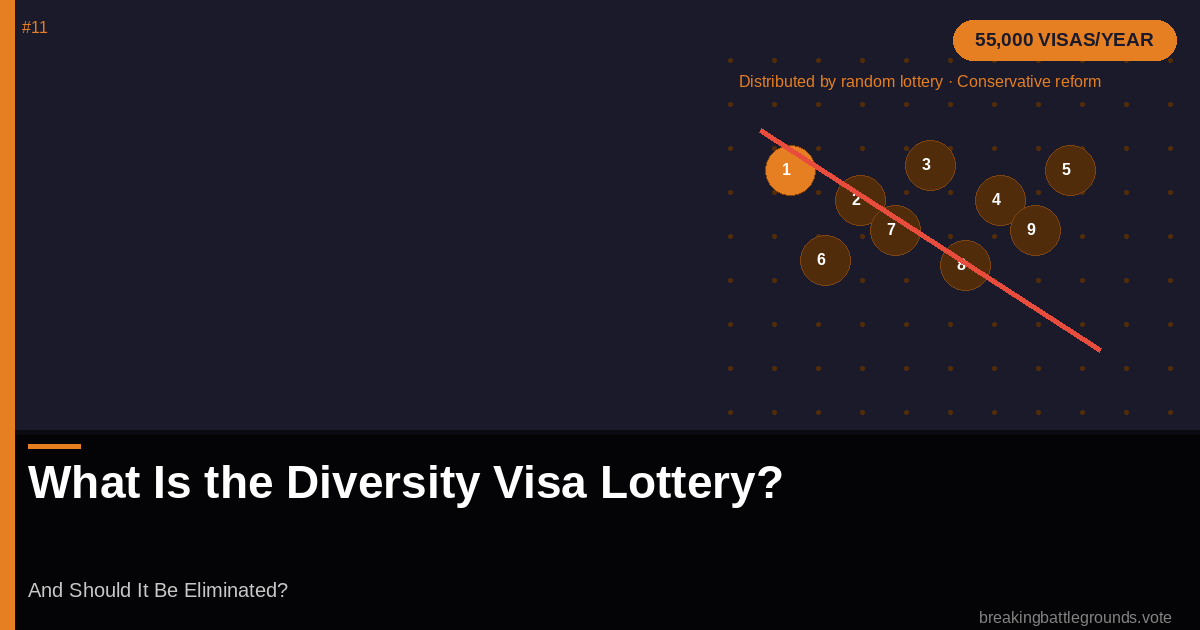
The Diversity Visa Lottery, also known as the DV program or the green card lottery, distributes 55,000 permanent resident visas each fiscal year to randomly selected applicants from countries with historically low immigration rates to the United States. Applicants must meet basic education or work experience requirements. Selection is by computer-generated random drawing from among all qualified applicants.
Congress created the program in the Immigration Act of 1990. Its stated purpose was to increase the diversity of immigrant origin countries at a time when immigration was dominated by a small number of source countries, primarily Mexico and the Philippines.
The Conservative Case for Elimination
The core conservative objection to the Diversity Visa Lottery is that it allocates a scarce resource, permanent legal residence in the United States, by chance rather than by any criteria related to national interest, economic contribution, or humanitarian need. Former Immigration Judge Art Arthur, who appeared on Breaking Battlegrounds Episode 232 on immigration reform, has argued that the 55,000 lottery visas represent the clearest example of immigration policy prioritizing process over outcomes.
Three specific conservative objections: First, the lottery visas compete directly with employment-based visa categories that have backlogs stretching years to decades for applicants from high-demand countries. Second, the randomness makes the program impossible to align with labor market needs. Third, consular and law enforcement officials have noted that the lottery has been exploited through fraud, fake applications submitted in large volumes to improve statistical odds, at rates higher than other visa categories.
What Would Replace It
Conservative reform proposals would redirect the 55,000 visa numbers to employment-based categories, specifically to clear the existing backlog of employment visa applicants who have been waiting years or decades for green cards because country-of-origin caps create per-country ceilings that produce enormous backlogs for applicants from India and China.
Redirecting lottery visas to clear the employment backlog would be revenue-neutral in visa numbers while dramatically changing who gets priority: from randomly selected applicants to individuals who already have job offers, employer sponsors, and documented skills.
Frequently Asked Questions
What is the Diversity Visa Lottery?
The Diversity Visa Lottery is a federal program that distributes 55,000 permanent resident visas annually by random drawing to applicants from countries with historically low immigration rates to the United States.
Why do conservatives want to eliminate the Diversity Visa Lottery?
Conservatives argue the lottery allocates immigration priority by chance rather than by merit, skills, or national interest. They propose redirecting those 55,000 visa numbers to employment-based categories to clear the existing backlog of skilled workers waiting years for green cards.
How many people apply for the Diversity Visa Lottery each year?
Typically 10 to 15 million people apply annually for the 55,000 available visas, a selection rate of less than one percent.