What Originalism Is
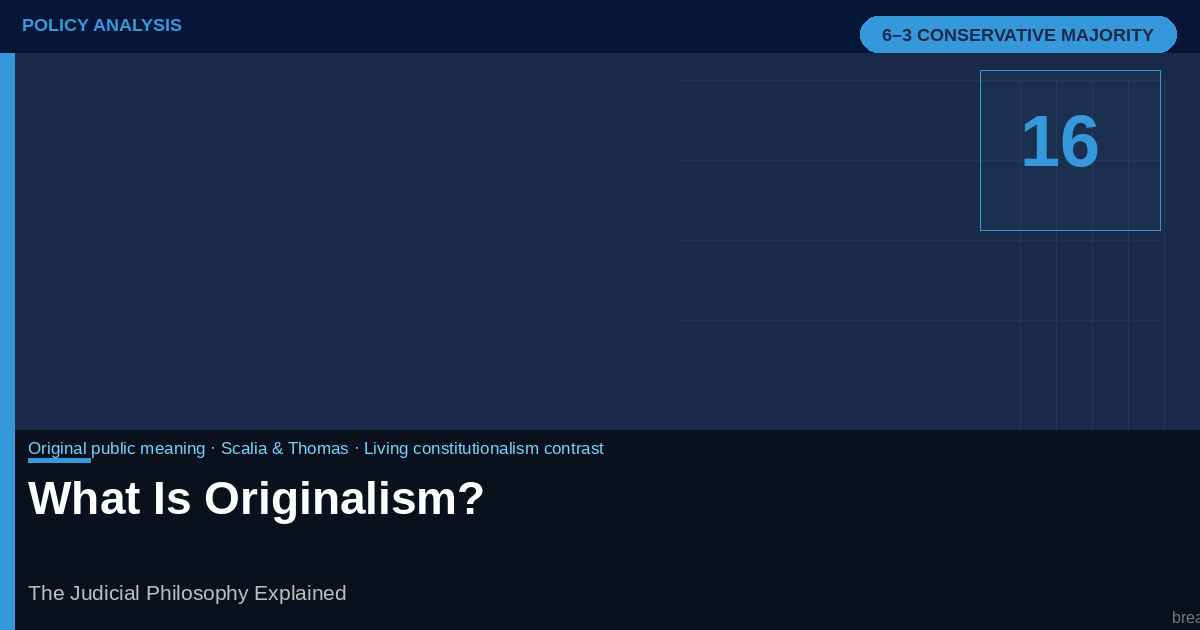
Originalism is a judicial philosophy holding that the meaning of the Constitution is fixed at the time of its ratification and that courts should interpret constitutional provisions according to that original meaning rather than updating them to reflect contemporary values or practical circumstances.
There are two main versions of originalism. Original intent originalism holds that courts should apply what the framers of the Constitution intended when they wrote specific provisions. Original public meaning originalism, the version dominant among conservative legal scholars today, including Antonin Scalia and Clarence Thomas, holds that courts should apply the meaning that a reasonable person familiar with the law would have understood the text to mean at the time of ratification, regardless of the framers’ subjective intent.
Originalism vs. Living Constitutionalism
Originalism is most often contrasted with living constitutionalism, the view that the Constitution’s meaning can and should evolve as society changes. Living constitutionalists argue that applying 18th-century meanings to 21st-century problems produces results the framers themselves would not have intended.
Originalists respond that a constitution with evolving meaning governed by unelected judges is not meaningfully different from judicial supremacy, judges simply imposing their current policy preferences under constitutional cover. The democratic argument for originalism: if the Constitution needs to change, the amendment process exists for that purpose. Unelected judges should not be the mechanism for constitutional change.
Ilya Shapiro on Originalism
Ilya Shapiro, Senior Fellow at the Manhattan Institute and a leading constitutional scholar, appeared on Breaking Battlegrounds Episode 229 to analyze the Supreme Court’s current direction. His assessment: the Court’s conservative majority has internalized originalism as a working interpretive methodology, not merely a rhetorical commitment. The decisions in Dobbs, Bruen, and the administrative law cases (Chevron’s overruling) all reflect originalist reasoning applied consistently rather than selectively.
Shapiro’s broader argument: originalism produces more predictable, more democratically accountable judicial outcomes than living constitutionalism, not because it always produces conservative results, but because it constrains judicial discretion.
Frequently Asked Questions
What is originalism?
Originalism is the judicial philosophy holding that the Constitution should be interpreted according to its original public meaning at the time of ratification, rather than updated to reflect contemporary values.
Who are the main originalist Supreme Court justices?
Justices Clarence Thomas and Neil Gorsuch are the most consistently originalist members of the current Court. Justices Samuel Alito, Brett Kavanaugh, and Amy Coney Barrett apply originalist reasoning regularly.
What is the difference between originalism and textualism?
Textualism is an approach to statutory interpretation (reading laws Congress passed) that focuses on the plain text of statutes. Originalism is an approach to constitutional interpretation. Both emphasize text over intent, but they apply to different legal sources.