What the Deep State Means
The deep state, in the conservative policy framework, refers to the permanent class of federal employees and agency officials who hold career positions independent of electoral outcomes and who, through their control of information, regulatory processes, and institutional norms, can shape, and in some cases resist, the policy agenda of an elected administration.
This is distinct from a conspiracy theory. The academic literature on bureaucratic politics, including work by political scientists Francis Fukuyama, Terry Moe, and James Q. Wilson documents that permanent bureaucracies develop institutional cultures, policy preferences, and informal power structures that create genuine friction with incoming political appointees who want to change agency direction.
The Conservative Experience
Conservative administrations have consistently documented specific forms of bureaucratic resistance: slow-walking implementation of policy changes, selective enforcement of regulations, strategic leaking to media outlets, and creative legal interpretations that delay or dilute executive priorities.
The Trump first term produced several documented examples: the FBI’s handling of FISA warrant applications in the Russia investigation, career State Department officials’ handling of Ukraine policy, and EPA career staff’s resistance to regulatory rollbacks. Whether one views these as resistance to illegitimate directives or appropriate institutional safeguarding depends largely on one’s political perspective, but the institutional friction was real and documented.
The Constitutional Framework
The constitutional question the deep state concept raises is substantive: Congress has created federal agencies and given them statutory authority. Career employees who follow the law they are charged to enforce are not doing anything illegal. The conservative argument is not that career employees should ignore law, it is that the sheer scale of the administrative state has made democratic accountability over regulatory policy nearly impossible.
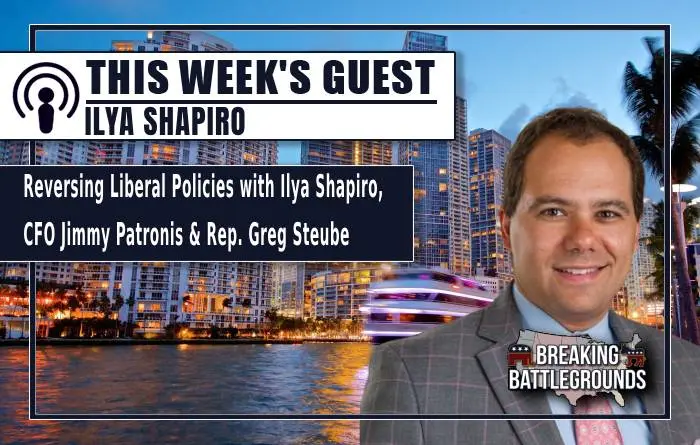
Ilya Shapiro, who appeared on Breaking Battlegrounds Episode 229, has argued that the post-Chevron landscape changes this dynamic: courts no longer defer to agency interpretations of ambiguous statutes, which means agencies have less independent legal authority to resist executive direction on regulatory matters.
Frequently Asked Questions
Q: What is the deep state?
A: The deep state refers to the permanent federal bureaucracy career employees of federal agencies who hold positions across administrations and who, through institutional position and expertise, influence or resist the policy agenda of elected administrations.
Q: Is the deep state a conspiracy theory?
A: The term is used both as a legitimate political science concept (bureaucratic resistance to political direction) and as a broader conspiracy framework. The academic concept that permanent bureaucracies develop independent institutional interests is well-documented in political science literature.
Q: How does the Trump administration's DOGE initiative relate to the deep state argument?
A: DOGE represents an attempt to dramatically reduce the size and scope of the federal bureaucracy. The conservative argument is that a smaller bureaucracy is more responsive to elected officials and more accountable to voters.