What Religious Liberty Is
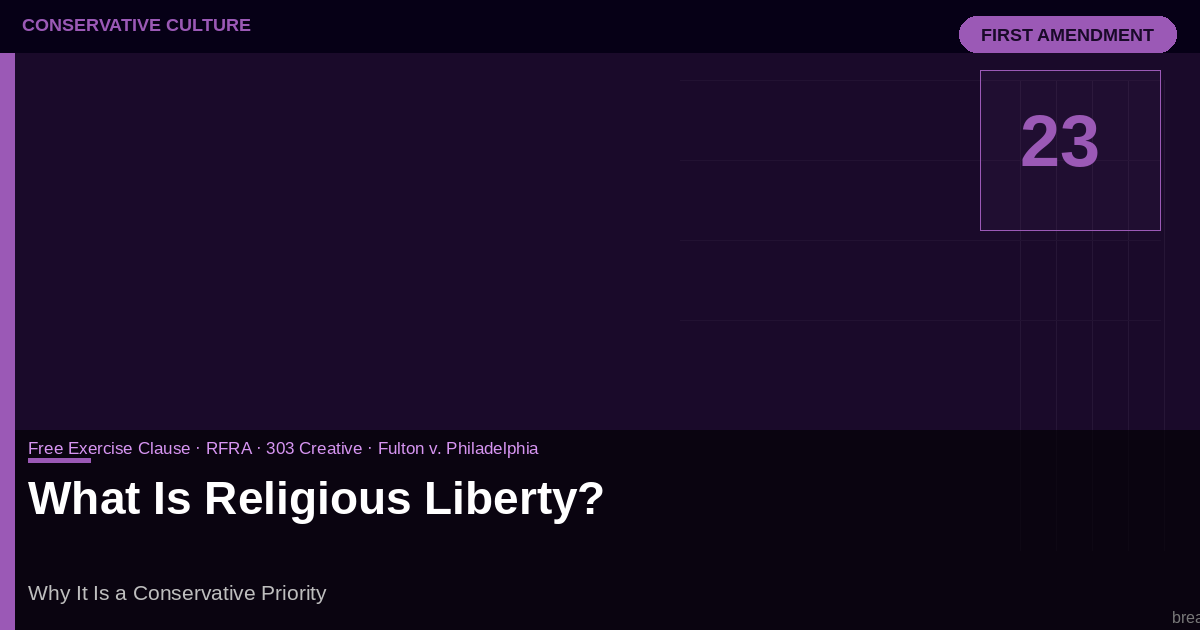
Religious liberty, in constitutional terms, rests on two First Amendment provisions: the Free Exercise Clause, which prohibits the government from interfering with religious practice, and the Establishment Clause, which prohibits the government from establishing an official religion or preferring one religion over others.
The Free Exercise Clause protects the right to hold religious beliefs and, to some extent, the right to act on those beliefs. The Supreme Court has wrestled for decades with how far the Free Exercise Clause extends when religious practice conflicts with generally applicable laws.
Where the Conflicts Arise
The most contested religious liberty cases involve conflicts between religious exercise and anti-discrimination law. The Colorado baker who refused to design a same-sex wedding cake (303 Creative LLC v. Elenis), the Washington florist who declined to arrange flowers for a same-sex wedding (Arlene’s Flowers v. Washington), and the Catholic foster care agency that declined to place children with same-sex couples (Fulton v. City of Philadelphia) all represent cases where religious practice conflicted with state anti-discrimination requirements.
The Supreme Court has generally ruled in favor of religious claimants in recent years, finding that state anti-discrimination laws violated the Free Exercise Clause when applied to religious objectors without a compelling government interest.
The Conservative Framework
The conservative religious liberty framework, articulated by scholars at the Becket Fund for Religious Liberty and applied by conservative justices on the Supreme Court, holds that the government must have a compelling interest and use the least restrictive means before it can substantially burden religious exercise. This strict scrutiny standard gives religious objectors significant legal protection against government mandates.
The practical application: an employer with religious objections to providing contraception coverage in employee health insurance has a Free Exercise claim against a mandate requiring such coverage. A religious school that teaches traditional marriage has a Free Exercise claim against a requirement to affirm same-sex relationships.
Frequently Asked Questions
What is the Free Exercise Clause?
The Free Exercise Clause is the provision of the First Amendment prohibiting the government from interfering with the free exercise of religion.
What is the Religious Freedom Restoration Act (RFRA)?
RFRA, passed in 1993, requires the federal government to demonstrate a compelling interest and use the least restrictive means before substantially burdening religious exercise. It is the primary federal statute protecting religious liberty.
Why is religious liberty a conservative priority in 2026?
Conservatives argue that anti-discrimination laws, healthcare mandates, and education regulations increasingly require religious individuals and organizations to act against their faith, creating conflicts that the First Amendment’s Free Exercise Clause was designed to prevent.