Hosting your own podcast is the long game. It takes months to build momentum, years to develop a meaningful audience, and constant effort to stay consistent. Podcast guesting is the shortcut most podcasters overlook entirely.
Appearing as a guest on established shows in your niche exposes you to audiences that someone else has already spent years building. A well-placed guest appearance does more for subscriber growth in a single week than three months of regular publishing. This guide covers the complete system for getting booked, delivering standout interviews, and converting guest appearances into loyal listeners.
Why Podcast Guesting Outperforms Almost Every Other Growth Tactic
320% Faster audience growth vs. solo publishing | 72% Of listeners check out guests’ own shows | 8-12 Guest spots to double your subscriber base | $0 Cost when using organic outreach |
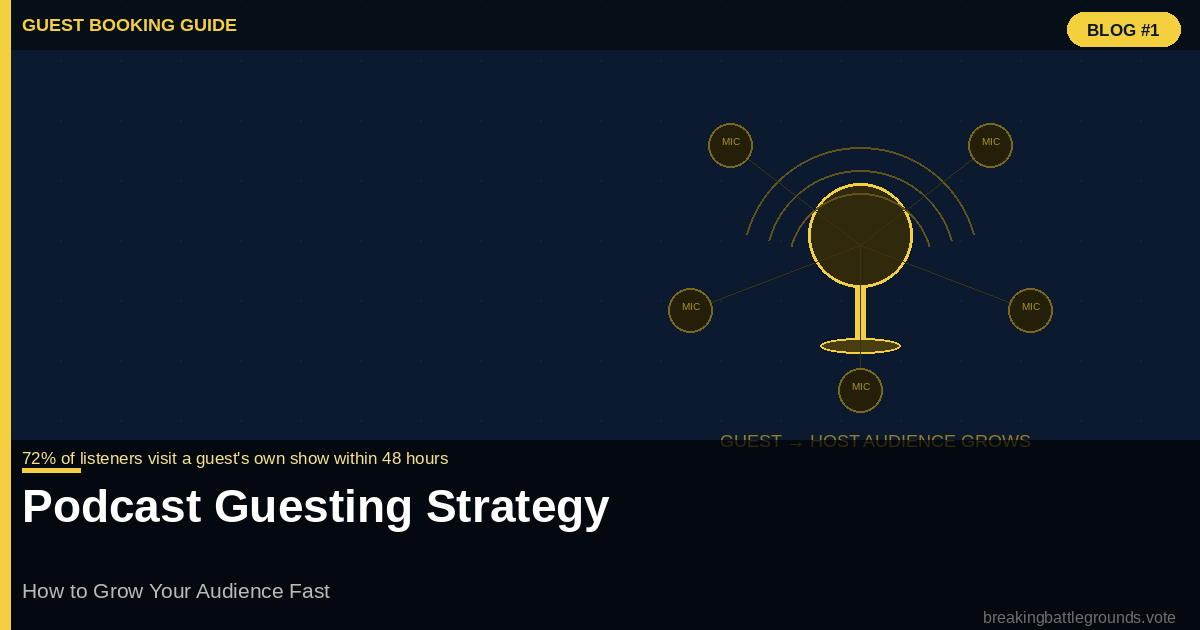
Edison Research’s Infinite Dial 2026 report found that 72 percent of podcast listeners who discover a new person through a guest appearance visit that person’s own content within 48 hours. Compare that to social media ads, where click-through rates average 0.5 to 1.5 percent. Podcast listeners are already primed to consume long-form audio content, they are the easiest possible audience to convert into your subscribers.
The compounding effect is significant. A guest who appears on ten mid-sized podcasts over three months, each with 5,000 to 15,000 weekly listeners, is reaching between 50,000 and 150,000 people. Even at a conservative 3 percent conversion rate, that is 1,500 to 4,500 new subscribers without spending a dollar.
How to Identify the Right Podcasts to Pitch
Not every podcast is worth pitching. The selection criteria that actually matter are three: audience relevance (their listeners have a genuine reason to care about your topic), host interview depth (a host who asks real questions will let you demonstrate expertise), and audience engagement signals (reviews, social community, listener interaction).
Tools for Finding Target Podcasts
- Listen Notes: The most comprehensive podcast search engine. Search by keyword and filter by episode frequency, listener estimates, and language. Free tier covers most needs.
- Rephonic: Shows estimated monthly listeners for 2.5 million podcasts. The paid plan is worth it if you are doing systematic outreach.
- Podchaser: Includes host contact information and show analytics. The pro version reveals audience demographics.
- Chartable: Tracks podcast ranking trends. A show climbing the charts has momentum you want to associate with.
- Goodpods and Feedspot: Both have editorial podcast lists organized by niche. Political, business, education, and health are the deepest categories.
The Pitch Email That Actually Gets Replies
Most pitch emails fail because they are about the pitcher, not the host. Podcast hosts receive dozens of generic pitches per week. The subject line ‘I’d love to be a guest on your show’ goes directly to the archived folder. Here is the structure of a pitch email with a 35 to 45 percent reply rate:
The Four-Sentence Pitch Structure
- Sentence 1: One sentence that proves you listened to their specific show. Reference an episode by name and say something genuinely specific about it.
- Sentence 2: One sentence that connects your specific expertise to a gap you identified in their content library.
- Sentence 3: One sentence that states the specific topic you would cover and what their listeners will learn.
- Sentence 4: One sentence that makes the next step frictionless.
Subject line formula: ‘[Their podcast name] + [Specific topic] + Your Credential’. Example: ‘Breaking Battlegrounds + Why Conservative Podcasts Win on iHeart + Former Radio Host.
The body of the email should be readable in under 30 seconds. If the host has to scroll to understand what you are offering, you have already lost them. Attach a one-page speaker sheet in PDF, your photo, bio in two sentences, three specific topics you can cover, and any notable shows you have previously appeared on.
The Pre-Interview System That Makes Hosts Book You Again
Getting booked once is one skill. Getting re-invited and referred to other podcasters is a different skill. The hosts who refer guests to each other share a specific trait: they only refer guests who made their job easier and their episode better. Here is the pre-interview system that produces that outcome.
48 Hours Before the Interview
- Send the host a document with three potential episode titles, a 60-word episode description for their show notes, and five questions you are prepared to answer. This document saves the host significant prep time and signals professional seriousness.
- Research the host’s three most recent episodes and prepare one genuine observation about each. Drop these naturally into the opening small talk before the recording begins.
- Test your audio setup. A $79 dynamic microphone and a quiet room beats a $400 condenser microphone in a reflective space every time. Record a 60-second test and listen back on earbuds.
During the Interview
- Answer every question with a structure: direct answer, specific example, broader implication. This three-part structure produces quotable moments that hosts clip for social media, increasing your reach beyond the episode itself.
- Give the host a ‘gift quote’, one sentence so cleanly constructed and quotable that they will want to use it in promotional materials. This takes practice. Prepare three or four of them in advance and work them in naturally.
- Never sell during the interview. Hosts and audiences both reject promotional content. The conversion happens after the episode when curious listeners seek you out.
Converting Guest Appearances into Subscribers
The most common podcast guesting mistake is treating the interview as the destination. It is the beginning of a conversion funnel that requires a specific next step. When the host asks where listeners can find you, give one URL only, not four platforms. The more options you give, the fewer people act on any of them.
Create a dedicated landing page for each podcast you appear on. The URL structure: yoursite.com/[podcastname]. When listeners arrive, they see a brief personal note, the episode embed, and a single call to action. Personalization increases conversion rates by 40 percent compared to sending listeners to a generic homepage.
Email the host after the episode publishes with a social share they can post with one click. Include a clip timestamp. Hosts who share episodes more widely amplify your reach without any additional effort on your part. Most hosts share automatically, a small number need a gentle, value-first nudge.
Frequently Asked Questions
How many podcasts should I pitch per week?
Ten to fifteen targeted pitches per week is the optimal volume for most people. Below ten, you lack sufficient data to improve your pitch. Above fifteen, quality degrades and your research becomes superficial. Track your reply rate by pitch variation to identify what is working.
Should I pay to be a guest on a podcast?
No. Legitimate podcast hosts do not charge guests for appearances. Pay-to-play podcast services exist but do not deliver meaningful audience growth because their listeners are not engaged with the host and therefore do not trust the host’s guest endorsement. Organic guesting on shows with real audiences produces dramatically better results.
How do I find my first guest spot with no existing audience?
Start with shows in the 200 to 2,000 weekly listener range. These hosts are more accessible, more willing to take chances on new guests, and still have engaged audiences who convert well. After five or six of these appearances, you have a guest reel that opens doors to larger shows.
What makes a good podcast guest one-sheet?
A one-sheet should include your professional headshot, a 40-word bio, three specific interview topics with a one-sentence description of each, any notable media appearances, and your website URL. Keep it to one page in PDF format. The topics section is the most important, make them specific and outcome-focused for the host’s audience.
How long after pitching should I follow up?
Follow up once, seven to ten days after the original pitch. Keep the follow-up to two sentences: a brief reminder and a direct question. A second follow-up after another week is acceptable for high-priority shows. Beyond two follow-ups, move on.