
So, you’re wondering how do podcasts make money? It’s a question a lot of people have when they start thinking about creating their own show. You see those big names out there, making bank, and you think, ‘Can I do that?’ The short answer is yes, but it’s not always as simple as just putting out episodes. It takes a plan. Most podcasts don’t hit it big overnight, and consistency is key. But the good news is, no matter what you talk about, if you build a solid audience that really connects with your content, there are ways to turn your passion into profit. Let’s break down how that actually works.
Key Takeaways
Podcasts can make money through various methods, not just sponsorships. Think affiliate marketing, selling merchandise, or even getting direct support from listeners.
Audience size matters for some methods like advertising, but a smaller, super-engaged audience can be very valuable to niche sponsors.
Building a loyal listener base and consistently providing good content is the foundation for making money.
Diversifying your income streams is a smart move. Relying on just one way to make money can be risky.
You don’t need millions of downloads to start earning. Many podcasters find success with direct listener support or affiliate marketing early on.
Understanding Podcast Revenue Streams

When you start a podcast, you might wonder how people actually make money from it. It’s not always as simple as just putting out episodes. There are different ways to bring in cash, and most successful podcasts use a mix of them. Think of it like building a business; you need multiple ways for money to come in.
Direct Versus Indirect Monetization
Podcasting revenue can be split into two main categories: direct and indirect. Direct monetization means you’re earning money straight from your podcast content itself. This could be through ads played during your show, sponsorships where a brand pays you to talk about them, or when listeners pay you directly, like through a membership program. Indirect monetization is a bit different. Here, your podcast acts as a platform to help you sell other things. Maybe you use your show to promote your own services, like coaching, or sell merchandise related to your podcast. It’s about using the audience you’ve built to create income in other ways.
The Role of Audience Size and Engagement
Many people think you need a massive audience to make money, but that’s not always the case. While a larger audience can certainly help, especially with certain types of advertising, engagement is often more important. A smaller group of listeners who are really into your show, interact with you, and trust your recommendations can be more valuable than a huge audience that just passively listens. Brands look at how many people listen, but they also care about how connected those listeners are to the podcast. A highly engaged audience means your recommendations are more likely to lead to sales for a sponsor.
Building a Foundation for Profitability
Before you can really make money, you need to build a solid base. This means consistently creating good content that your audience enjoys. You also need to understand who your listeners are – what they like, what they need, and what they respond to. Building a relationship with them is key. Once you have that foundation, you can start exploring different ways to earn money. It’s about creating value for your listeners first, and then finding ways to get paid for that value. Trying to monetize too early or in ways that don’t fit your audience can backfire. It’s a marathon, not a sprint, and focusing on growth and listener connection comes first.
Leveraging Sponsorships and Advertising
When your podcast starts gaining traction, sponsorships and advertising can become a significant income source. This is where brands pay to have their products or services mentioned on your show. It’s a direct way to get paid for the audience you’ve built.
Securing Brand Partnerships
Landing a good sponsorship deal isn’t just about having a lot of listeners; it’s about having the right listeners for a brand. Most companies look for podcasts with a consistent audience, often needing at least 5,000 to 10,000 downloads per month. Beyond just numbers, they want to see that you post regularly and that your audience is engaged – think good reviews and active community interaction. Building a relationship with your audience first makes your podcast more attractive to potential sponsors.
When you’re ready to pitch, create a media kit. This document should include:
Your podcast’s download statistics and listener demographics (age, interests, location).
Information about your show’s content and its alignment with potential sponsors.
Examples of past successful promotions or endorsements.
Reach out directly to brands that fit your show’s theme and audience. Personalizing your pitch and explaining how your podcast can help them reach their target customers is key. Offering specific packages, like recurring monthly mentions or sponsorships for a particular series, can also be effective.
Understanding CPM and Flat-Rate Deals
There are two main ways advertisers pay podcasters: CPM (Cost Per Thousand) and flat-rate deals. CPM means you get paid a set amount for every 1,000 downloads an episode receives. For example, if the rate is $25 CPM and your episode gets 20,000 downloads, you’d earn $500 ($25 x 20).
Pricing Model | Description |
|---|---|
CPM | Advertisers pay per 1,000 downloads/listens. Rates can range from $15-$50. |
Flat-Rate | A fixed price for an ad spot, regardless of download numbers. |
Flat-rate deals are often simpler, especially for newer podcasts or those with a highly dedicated niche audience. You agree on a set price for a specific ad placement, like a 60-second mention in the middle of an episode. This can be easier to budget for both you and the advertiser.
Authentic Product Placement Strategies
To make advertising feel natural and not like a disruption, focus on genuine endorsements. Mention products or services you actually use and believe in. This builds trust with your listeners, making them more receptive to the recommendation. Consider different ad placements:
Pre-roll: A short ad at the very beginning of the episode.
Mid-roll: An ad placed in the middle of the content, often considered the most effective.
Post-roll: An ad at the end of the episode, which some listeners might skip.
Using unique promo codes or trackable links for sponsors is a great way to show them the value you’re providing and can help secure long-term partnerships. It also allows you to measure how well the promotion is performing.
When integrating ads, always prioritize your audience’s experience. An ad that feels forced or irrelevant can alienate listeners, no matter how much it pays. Authenticity is the currency that keeps your audience engaged and coming back for more.
Direct Audience Support and Memberships
Beyond sponsorships and ads, a powerful way to make money from your podcast is by connecting directly with your most dedicated listeners. These are the people who truly value your content and are often willing to pay for more. Building this direct relationship can create a stable income stream and a more engaged community.
Implementing Paid Subscription Models
Subscription models allow your loyal audience to support your show with regular payments, often in exchange for exclusive benefits. Think of it like a recurring membership. Platforms like Patreon, Supercast, and even Apple Podcasts Subscriptions make it relatively simple to set up these tiers. Listeners subscribe for a monthly fee, and in return, they might get ad-free episodes, early access to new content, or bonus episodes that aren’t available to the general public. It’s a way to provide steady income without needing a massive audience size, which is great for shows that are still growing.
Offering Exclusive Content and Perks
To make a subscription model work, you need to offer something compelling. This could include:
Bonus Episodes: Create content that goes deeper into topics, offers extended interviews, or provides behind-the-scenes looks.
Early Access: Give paying members a head start by releasing episodes to them 24-48 hours before everyone else.
Community Access: Build a private space, like a Discord server or a dedicated Facebook group, where members can interact with you and each other.
Live Q&A Sessions: Host monthly calls where members can ask you questions directly.
The key is to provide tangible value that makes listeners feel like they’re getting something special for their support.
Utilizing Crowdfunding Platforms
Crowdfunding platforms, such as Kickstarter or Indiegogo, can also be used to fund specific podcast projects or to provide ongoing support. While often used for one-time campaigns, some podcasters use them for continuous support, similar to subscription models. This approach can be particularly effective if you have a specific goal in mind, like funding a special series or upgrading equipment. It allows your audience to contribute to the growth of the podcast in a very tangible way. Remember, the global podcast listener base is growing, with projections showing continued expansion [07bc]. This means more potential supporters for your show.
Affiliate Marketing for Podcasters
Earning Commissions Through Recommendations
Affiliate marketing is a straightforward way to earn money by recommending products or services your audience might find useful. The basic idea is that you promote something, and when a listener takes a specific action—like making a purchase or signing up for a service—you earn a commission. This works best when the products you recommend genuinely align with your podcast’s topic and your listeners’ interests. Authenticity is key; listeners can tell when you’re just trying to sell something.
For instance, if your podcast focuses on home cooking, recommending a specific kitchen gadget or a meal kit service makes sense. You can share a unique discount code or a special link. When listeners use that code or link, you get a percentage of the sale. It’s a performance-based system, meaning you’re rewarded for driving results for the company.
Integrating Affiliate Links Effectively
Simply mentioning a product once might not be enough. To make affiliate marketing work, you need to integrate recommendations naturally into your content. This can be done in several ways:
Show Notes: Always include affiliate links in your episode show notes. This is the primary place listeners look for more information.
Verbal Mentions: Weave mentions of products or services into your conversations during the episode. A brief, genuine endorsement can be very effective.
Dedicated Segments: Consider a short, regular segment where you highlight a product or service you’ve been using and recommend.
Email Lists: If you have an email list, share affiliate links and special offers with your subscribers.
Transparency is non-negotiable. Always disclose your affiliate relationships to your audience. This builds trust and is often a legal requirement.
Choosing Relevant Affiliate Programs
Selecting the right affiliate programs is crucial for success. Start by thinking about the products and services you already use and love. If you’re passionate about them, it will be easier to talk about them authentically. Many companies have affiliate programs you can join directly. Additionally, there are affiliate networks that act as marketplaces, connecting you with a wide range of brands. Some popular options include:
Amazon Associates: A vast program with products across almost every category.
CJ Affiliate (formerly Commission Junction): Offers partnerships with many well-known brands.
Rakuten Advertising: Connects you with brands in various sectors, including retail and finance.
When choosing, consider the commission rates, the cookie duration (how long after clicking a link you can still earn a commission), and the overall reputation of the brand. Don’t be afraid to experiment with different programs to see which ones perform best for your podcast. You can explore various monetization strategies, including affiliate marketing, to generate income from your podcasting efforts.
Affiliate Network | Typical Commission Structure | Best For |
|---|---|---|
Amazon Associates | Percentage of Sale | Broad product recommendations |
CJ Affiliate | Percentage of Sale, CPA | Diverse brand partnerships |
Rakuten Advertising | Percentage of Sale | Retail, finance, and travel brands |
Expanding Revenue Through Ancillary Opportunities

Beyond direct advertising and listener support, podcasts can tap into a variety of related avenues to build income. These ancillary opportunities often leverage the authority and audience trust you’ve already cultivated.
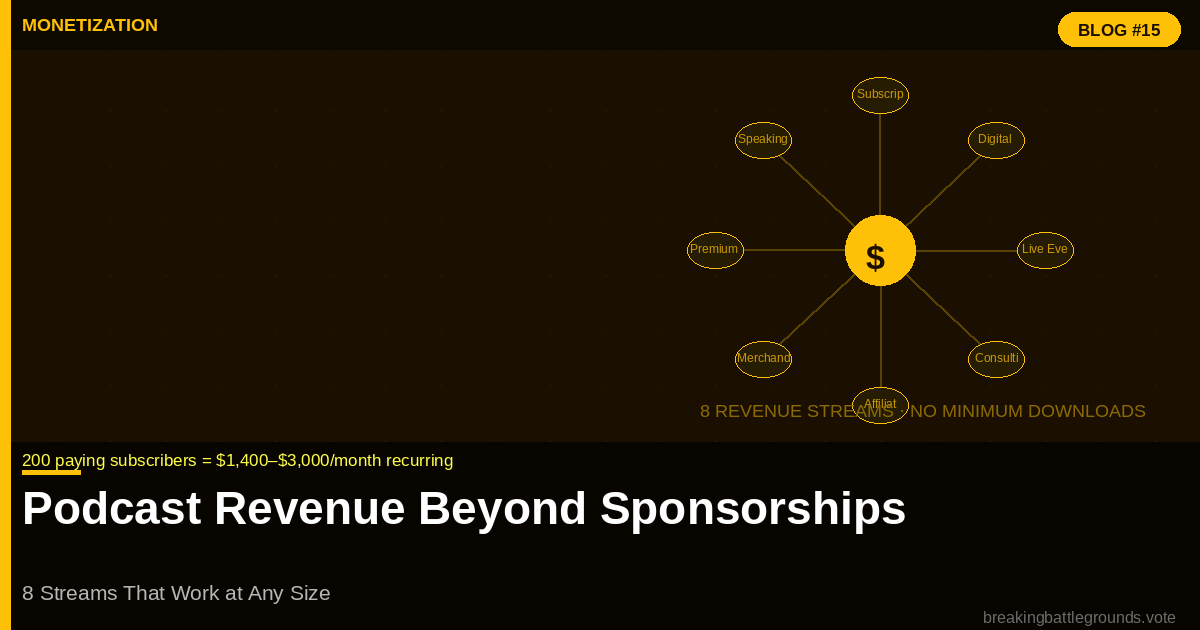
Selling Branded Merchandise
Creating merchandise is a tangible way for listeners to connect with your podcast and support your work. Think beyond just t-shirts; consider mugs, stickers, notebooks, or even custom-designed items that reflect your show’s unique theme or inside jokes. The key is to offer products that your audience genuinely wants and that align with your brand. Utilizing print-on-demand services can minimize upfront costs and inventory management, allowing you to focus on design and promotion. This approach turns your listeners into walking advertisements.
Monetizing Live Events and Recordings
Bringing your podcast to life in a live setting can be a significant revenue generator. This could involve ticketed live shows, workshops, or even virtual events. Live recordings often create a special atmosphere that fans are willing to pay for. You can also offer premium experiences, such as meet-and-greets or Q&A sessions with guests, as part of the ticket package. Repurposing these live events into exclusive content for paying subscribers or selling recordings can create additional income streams.
Leveraging Expertise for Speaking Engagements
Your podcast serves as a powerful platform to showcase your knowledge and build your reputation within your niche. This can directly lead to paid speaking opportunities at conferences, industry events, or corporate functions. Event organizers often seek out podcast hosts because they have a proven ability to engage an audience.
Here are some ways your podcast can lead to speaking revenue:
Showcase your authority: Regularly discussing your niche demonstrates your command of the subject matter.
Build a network: Connect with guests and listeners who might have speaking opportunities.
Create a speaker reel: Use compelling clips from your podcast to pitch yourself for events.
Your podcast is essentially a 24/7 audition for speaking gigs. The more you consistently produce valuable content, the more visible you become to potential event organizers looking for engaging speakers. This can open doors to lucrative engagements that extend far beyond the podcast itself, often leading to further business partnerships and media appearances.
This can also lead to other opportunities like book deals or consulting work, further diversifying your income. For instance, a podcast focused on business growth might attract speaking invitations from industry associations, which in turn could lead to corporate training contracts or even a book deal based on the podcast’s core themes. You can explore how other podcasters have successfully monetized their shows by looking at various podcast monetization strategies.
Strategic Approaches to Podcast Monetization
Developing Multiple Revenue Streams
It’s rarely a good idea to put all your eggs in one basket when it comes to making money from your podcast. Most successful podcasters don’t rely on just one method. Instead, they build a mix of income sources. Think about combining sponsorships with listener support, or affiliate marketing with selling your own products. This diversification helps create a more stable income, even if one stream slows down. For example, a podcast might have a few sponsors each month, offer bonus content to paying subscribers on platforms like Patreon, and also include affiliate links in their show notes for products they genuinely use and recommend.
Aligning Monetization with Audience Preferences
Your audience is the most important part of your podcast. How you make money should feel natural to them, not like a constant sales pitch. If your listeners are primarily there for in-depth discussions on a specific topic, a sudden influx of unrelated ads might turn them off. It’s better to find sponsors or create products that genuinely fit the interests of your listeners. For instance, a podcast about vintage cars would do well with sponsors selling car parts or detailing services, rather than, say, a fast-food chain. Understanding what your audience likes and what they expect from your show is key to choosing the right monetization methods.
The Importance of Consistent Content Creation
No matter how many ways you plan to make money, none of it will work if you don’t consistently put out good content. Listeners come back for the quality and reliability of your show. If episodes become infrequent or the quality drops, your audience size and engagement will likely suffer, impacting your ability to attract sponsors or get listener support. Building trust and a loyal following takes time and regular effort. Consistency is the bedrock upon which all successful podcast monetization strategies are built. Keep showing up for your audience, and the revenue opportunities will follow.
Building a sustainable income from your podcast isn’t just about finding sponsors or asking for donations. It’s about creating a strong connection with your listeners and providing them with consistent value. When you focus on serving your audience well, monetization becomes a natural extension of the relationship you’ve built.
Want to make money from your podcast? There are many smart ways to do it. You can get help from sponsors, sell your own stuff, or even ask listeners for support. Finding the right method depends on your show and audience. Learn more about these strategies on our website!
The Bottom Line: Your Podcast Can Be Profitable
So, can you actually make money from podcasting? The short answer is yes, you really can. It might take some time and effort, but with a solid plan, you can turn your passion project into a source of income. Remember, it’s not just about how many people download your show; it’s about building a connection with your listeners and offering them something they value. Whether you’re using sponsorships, affiliate marketing, or asking for direct support from your audience, there are many ways to get started. The key is to stay consistent, keep creating great content, and explore the strategies that best fit your show and your listeners. Don’t get discouraged if you don’t see results right away; building a successful podcast takes time, but the rewards can be well worth it.
Frequently Asked Questions
Can I really make money from podcasting?
Yes, absolutely! Many people make a good living from podcasts. While some big names earn millions, even smaller shows can bring in decent money. It all depends on how many people listen, how much they like your show, and the ways you choose to earn cash.
How many listeners do I need to start making money?
You don’t need a massive audience to start. You can begin earning with affiliate marketing or selling your own stuff even with just a few hundred listeners. For companies to advertise on your show, they usually look for at least 5,000 to 10,000 people listening to each episode, but sometimes smaller, super-fans are even better for certain brands.
What’s the best way to earn money with my podcast?
The most reliable ways to make money are by recommending products you like and earning a commission (affiliate marketing), building an email list to connect with your audience, creating your own digital products like guides or courses, and offering special content for paying subscribers. Ads and sponsorships are good too, but often come later.
Can I make money from my podcast without ads?
Definitely! Many successful podcasters earn most of their money from things like affiliate marketing, selling their own courses or coaching services, giving talks, or offering exclusive content to fans who pay a monthly fee. Creating your own products usually brings in more money over time than just relying on ads.
How long will it take to start earning money?
If you use affiliate marketing or build an email list right away, you could start earning within a few months. If you plan to create your own courses or get paid to speak, it usually takes about 6 to 12 months of consistently making episodes and growing your audience.
How much money can a podcaster actually make?
Earnings can vary a lot. Beginners might make $100 to $1,000 a month. More established podcasts with lots of listeners can earn anywhere from $5,000 to $50,000 or even more each month. It really depends on how many people listen, how engaged they are, and the different ways you make money.