The podcast market has 4.2 million active shows as of 2026. The vast majority are undifferentiated, generic names, stock photo artwork, vague taglines that could describe any show in their category. The shows that grow are the shows where every element of the brand communicates something specific and memorable about why this show is different from the other 50 shows covering the same topic.
Branding is not design. It is the system of signals, name, visual identity, verbal identity, editorial stance, and hosting personality, that tells a potential listener who you are, what you cover, and why they should give you 45 minutes of their attention. Every element either reinforces or undermines that communication.
The Podcast Name: The Most Important Brand Decision You Make
Podcast names fail in three predictable ways: they are generic (The [Topic] Podcast, Talking [Topic], [Topic] Today), they are too clever at the expense of clarity (a clever name that requires explanation defeats itself), or they are accurate but unmemorable (a description rather than a name).
The framework for a strong podcast name has three components. First, topical signaling, someone unfamiliar with the show should be able to guess the general subject area from the name alone. ‘Breaking Battlegrounds’ signals political competition and contested terrain, clearly not a cooking show or true crime podcast. Second, tonal signaling, the name’s language and associations communicate the show’s personality. ‘Breaking Battlegrounds’ sounds serious, energetic, and action-oriented. Third, memorability, the name is distinct enough to be recalled after a single mention.
Name Testing Before Committing
- Say it aloud and ask whether it sounds clear or requires spelling clarification. Names that require ‘that’s B-A-T-T-L-E…’ explanations create friction at exactly the moment when a new listener is trying to find your show.
- Search it on Apple Podcasts and Spotify. If multiple shows share your name or are phonetically similar, you will lose search results to them.
- Check trademark availability if you plan to commercialize the brand. A business name search through the USPTO database takes five minutes and prevents expensive rebrand situations.
- Test recall: tell ten people the name in conversation, then ask them to repeat it three days later. If fewer than seven can recall it accurately, the name has a memorability problem.
Podcast Cover Art: Designing for the Thumbnail
Podcast cover art is seen at one primary size: the thumbnail, approximately 100 by 100 pixels, in a grid of other thumbnails. The design choice that loses the most new listeners is art that looks good at full resolution but becomes unreadable at thumbnail scale.
The rules for podcast artwork that works at thumbnail size: maximum two text elements (show name and possibly host name, nothing else), high contrast between text and background, a single dominant visual element rather than a collage, and no fine details that disappear at small sizes.
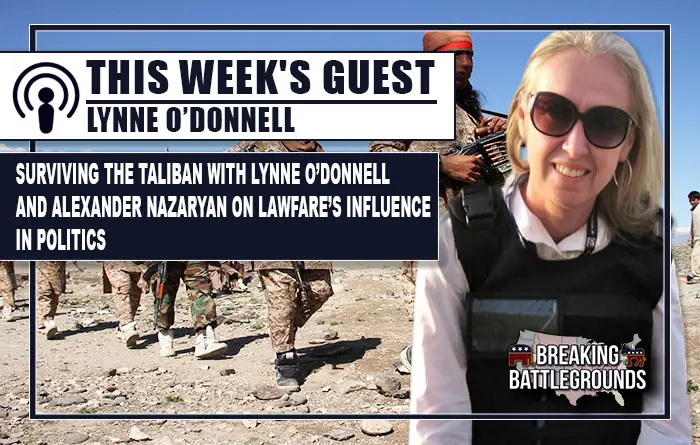
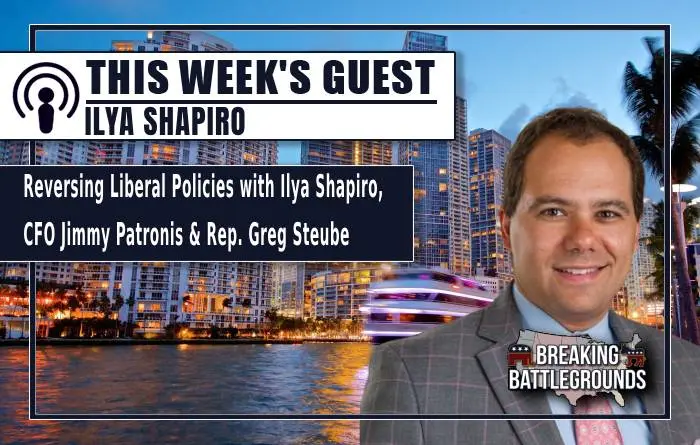
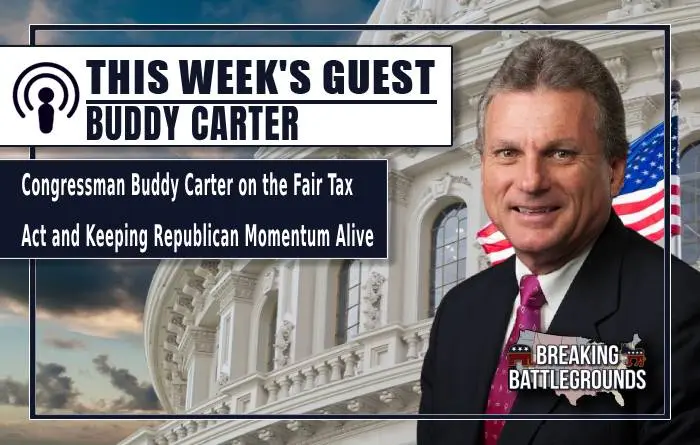
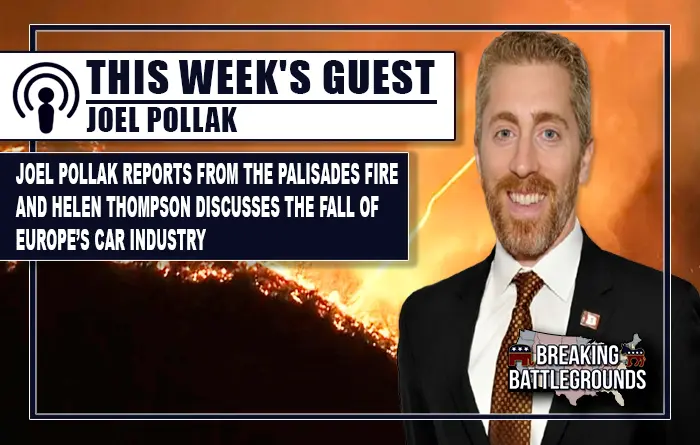
Political and news podcasts that perform well visually share a common design vocabulary: bold typography, high contrast (dark backgrounds with light text or vice versa), and a distinctive color palette used consistently across all brand materials. The Breaking Battlegrounds visual identity, navy background with strong accent color, is immediately recognizable in the political podcast category because it stands out from the stock photography that dominates competing shows.
The Three Artwork Mistakes to Avoid
- Headshots as cover art, Unless you are already a nationally recognized figure, your face does not function as a brand signal to people who do not already know you. A memorable graphic or typography-focused design performs better for discovery.
- Stock photo backgrounds, Stock photography makes shows look interchangeable. Every political podcast using a microphone stock photo looks identical in the browse grid.
- Too much text, The show name is the only text that must be legible at thumbnail scale. Episode numbers, guest names, taglines, and website URLs are invisible at 100 pixels wide and clutter the design.
Verbal Identity: The Words That Define Your Show
Visual identity is what your show looks like. Verbal identity is how it speaks. Most podcasters have an implicit verbal identity, a natural conversational style, but have never articulated what it is, what it rules out, and how it should be applied consistently across all touchpoints: episode introductions, show notes, social media posts, and episode descriptions.
The three elements of a strong verbal identity: the editorial voice (formal or conversational, analytical or emotional, insider or accessible), the specific vocabulary (the terms you use and consistently avoid, ‘conservative practitioner’ rather than ‘right-wing commentator’), and the value proposition statement (the single sentence that explains what a listener gets from this show that they cannot get anywhere else).
Breaking Battlegrounds’s value proposition, implicit in every episode, is: primary-source access to conservative decision-makers, analyzed by practitioners with the credentials to ask meaningful questions. Every episode, every description, and every promotional piece should reinforce that positioning.
Frequently Asked Questions
What size should podcast cover art be?
Apple Podcasts requires cover art between 1400×1400 and 3000×3000 pixels in JPEG or PNG format at 72 dpi. The optimal size is 3000×3000 pixels. Critically, the design must be legible and recognizable at 100×100 pixels, the thumbnail size at which it appears in podcast directories.
How do I choose a name for my podcast?
A strong podcast name signals the topic and tone, is distinct enough to be memorable after a single mention, is clear when spoken aloud, and is not already used by a competing show. Test it by saying it to ten people and checking recall three days later. At least seven of ten should be able to recall it accurately.
Should my face be on my podcast artwork?
Only if you are already a recognized public figure whose face carries brand recognition. For most podcasters, a typography-focused or graphic design that stands out in the browse grid performs better for discovery than a headshot.
How do I write a podcast description that attracts listeners?
A strong podcast description answers four questions in under 100 words: what the show covers, who hosts it and why they are credible, who the typical guest is, and what the listener will get from tuning in that they cannot get elsewhere. Avoid generic phrases like ‘your favorite podcast’ or ‘thought-provoking conversations’ that apply to every show in the directory.