Every podcast audience is platform-dependent by default. Your Spotify followers exist in Spotify’s system. Your Apple Podcasts subscribers live inside Apple’s infrastructure. If Spotify changes its algorithm, reduces your distribution, or one day charges to reach followers, you have no alternative channel to reach your audience. Your email list is the exception, it exists in a system you control and pay for directly.
The podcasters who build sustainable businesses around their shows almost universally have email lists that predate or developed alongside their podcast audiences. The email list is not a supplement to the podcast audience; it is the foundation the podcast audience is built on top of.
Setting Up Your Email List Before Episode One
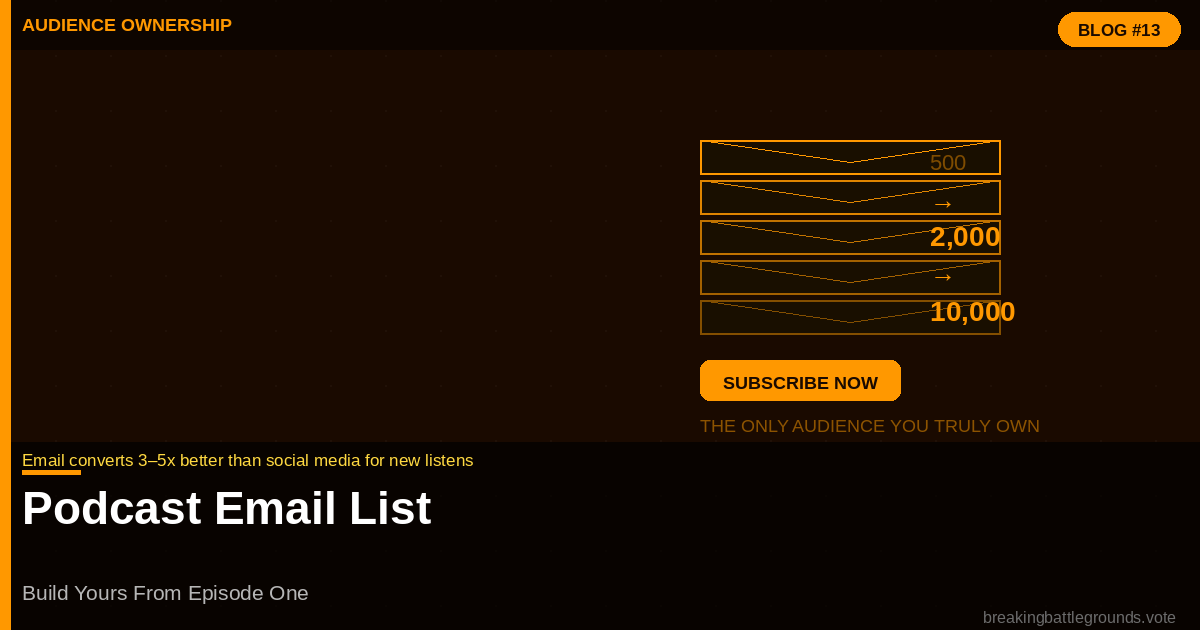
3-5x Higher conversion vs social media | 21% Average email open rate for podcast newsletters | $0 Cost on Mailchimp free tier to 500 subscribers | Day 1 When to start collecting emails |
The email platform decision is simpler than the market makes it appear. For a podcast just launching, three platforms cover virtually all needs. Mailchimp’s free tier handles up to 500 subscribers with basic automation and broadcast email at no cost, sufficient for most shows in their first year. ConvertKit (now Kit) offers superior automation and tagging for $9 per month, making it the better choice if you plan to segment your audience or sell products. Substack is the best option if you want email and a paid subscription layer in one platform, Breaking Battlegrounds uses Substack for exactly this reason.
Regardless of platform choice, set up the list before publishing Episode 1. The listeners who find your show in the first week are the most motivated to subscribe to everything you offer. Capturing those early subscribers through an email form on your website is significantly more efficient than retroactively building the list after momentum builds.
Lead Magnets That Work for Podcasters
A lead magnet is a free resource offered in exchange for an email address. Generic lead magnets produce generic subscribers. The best podcast lead magnets are directly connected to the episode content and require minimal production effort to create.
The Episode Resource Sheet
After any episode that references multiple books, studies, tools, or organizations, create a one-page PDF compiling all the resources mentioned with brief descriptions and links. Offer it in the episode: ‘I have put together a resource sheet with every book and tool we mentioned today, download it free at [URL].’ Episode resource sheets generate signup rates of 5 to 12 percent of episode listeners, significantly outperforming generic newsletter signup calls.
The Bonus Clip or Extended Interview
Record 5 to 10 minutes of additional conversation with a guest, content that did not make the main episode. Offer it as a free download in exchange for an email address. Breaking Battlegrounds’s model of offering subscriber-only content through Substack applies this principle at scale: the email subscriber relationship provides a layer of value the free listener audience does not receive.
The Show Summary Guide
Create a one-page PDF summary of your show’s key recurring frameworks, recommendations, or resources. ‘The Breaking Battlegrounds Policy Analysis Framework’ or ‘The 7 Questions We Ask Every Political Guest’ are examples. These perform best for educational shows where listeners want a reference document from the content.
What to Send: The Weekly Podcast Newsletter Framework
The email newsletter that converts subscribers into loyal listeners has four components: a brief personal note from the host (two to four sentences, not corporate), the episode summary (three to five key takeaways, not a generic description), a direct play link or episode embed, and one question for listeners to reply to. The question is the highest-engagement element, it converts a broadcast into a conversation and produces replies that give hosts direct feedback on what resonates.
The cadence that works: send the newsletter within 24 hours of episode publication, while the episode is algorithmically fresh and your audience’s attention is oriented toward your show. Newsletters sent more than 48 hours after episode publication get significantly lower open and click rates because the episode is no longer new.
Frequently Asked Questions
What email platform should a podcaster use?
Mailchimp is the best free option for podcasters under 500 subscribers. ConvertKit (now Kit) at $9/month is better for automation and audience segmentation. Substack combines email newsletter and paid subscription in one platform and is ideal for podcasters who want a direct monetization layer alongside their newsletter.
How do I get podcast listeners to join my email list?
The most effective tactics are: a verbal call-to-action in every episode with a specific reason to subscribe (not ‘join my newsletter’ but ‘get the free resource sheet with every book mentioned today’), a lead magnet tied directly to episode content, and a visible email signup form embedded on your podcast website or show notes page.
How often should I email my podcast subscribers?
Once per week, timed with your episode publication, is optimal for most podcast newsletters. More frequent emails reduce open rates without proportional engagement benefit. Less frequent contact reduces list engagement and deliverability over time. For shows publishing multiple times per week, consider a weekly digest rather than one email per episode.
What is the average open rate for podcast email newsletters?
The average email open rate across all industries is 21 percent. Podcast newsletters typically achieve 25 to 45 percent open rates because subscribers opted in specifically for the content and have an existing relationship with the host. Open rates above 30 percent indicate a healthy, engaged list.