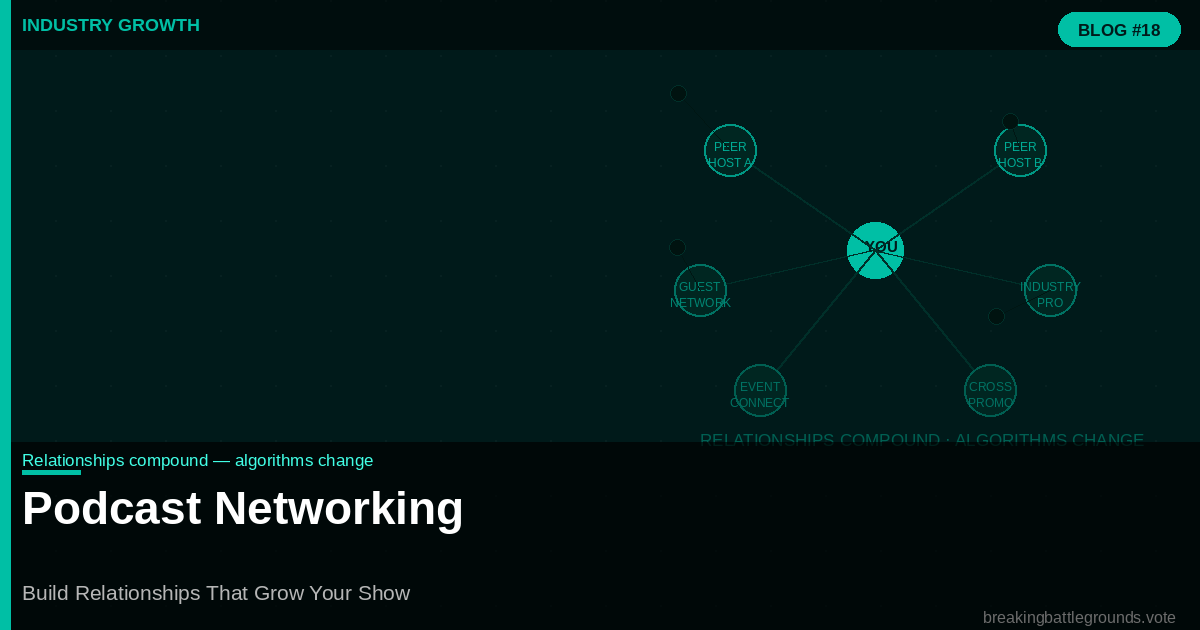
The logic of cross-promotion is elegant: every podcast host has spent months or years building an audience that trusts their recommendations. A listener who has followed a show for 100 episodes treats that host’s endorsement of another show with a credibility weight equivalent to a trusted friend’s recommendation. No paid advertising replicates that trust level.
Cross-promotion costs nothing except time and requires only one thing: genuine alignment between shows. The audience of a conservative political podcast has significant overlap with the audience of a conservative policy podcast, a national security analysis show, or a state politics program. A cross-promotion between aligned shows introduces each audience to content they have an organic reason to love. A cross-promotion between misaligned shows produces low conversion and frustrated audiences.
The Four Cross-Promotion Formats
Format 1: The Feed Swap
The simplest form of cross-promotion. Show A publishes an episode of Show B in its feed (or a best-of clip). Show B does the same. Both audiences get an introduction to the other show in their natural listening environment, their existing podcast queue. No joint recording required.
Feed swaps work best between shows of similar audience size (within two times of each other) and complementary topics. They require minimal coordination and can be executed asynchronously. The feed swap is the ideal entry point for podcasters exploring cross-promotion for the first time.
Format 2: The Joint Episode
Both hosts appear together for a single episode, published to both feeds simultaneously or within 48 hours. The episode is promoted as a special collaboration event on both shows’ social channels, newsletters, and episode descriptions. Each feed publishes the same episode, effectively doubling the promotional surface.
Joint episodes require more coordination than feed swaps but produce significantly higher conversion rates because listeners hear both hosts’ voices together. The chemistry or intellectual tension between hosts from different shows is itself a content draw, it creates something neither show could produce independently.
Format 3: The Guest Exchange
Host A appears as a guest on Show B. Host B appears as a guest on Show A. Both episodes are published in a coordinated window, ideally the same week. Listeners of each show who find the guest compelling have a direct path to the guest’s own show. This is the highest-conversion format because it gives each audience an extended sample of the other show’s host.
Format 4: The Promotional Read
The simplest format: each host records a 60-second promotional endorsement of the partner show, which plays mid-roll during a regular episode. This requires no joint production. The endorsement should be conversational and specific, ‘I have been listening to [Show X] for six months and the episode with [Specific Guest] on [Specific Topic] was the best political analysis I heard all year’ performs significantly better than ‘check out my friend’s podcast.’
Finding the Right Cross-Promotion Partners
The selection criteria that determine cross-promotion success are three: audience alignment, non-competition, and similar production quality. Audience alignment means the listeners of both shows have overlapping interests and would genuinely benefit from the other show. Non-competition means the two shows are complementary rather than substitutes, a conservative political interview show and a conservative policy analysis show are complementary; two conservative political interview shows are competitive. Similar production quality means neither show’s audience will experience a jarring quality downgrade when they hear the partner show.
How to Find Partners
- Rephonic’s podcast graph tool shows which shows share overlapping audiences. Search your show and identify shows whose audiences significantly overlap with yours.
- Podchaser and Listen Notes both have direct messaging functionality. Reach out with a specific, non-generic proposal.
- Podcast Facebook groups and Discord communities organized by niche are where hosts connect directly. The political podcaster communities on Facebook have several active groups.
- Attend podcast industry events, Podcast Movement, Podfest, and smaller regional events, where direct relationship-building accelerates what email outreach takes months to achieve.
The Cross-Promotion Pitch Email That Works
The cross-promotion pitch email fails for the same reason the guest pitch email fails: it is about the pitcher rather than the recipient. The most effective structure for a cross-promotion pitch:
Open with a specific reference to their show, an episode you listened to, a guest you found compelling, a topic they covered that your audience would also respond to. This demonstrates genuine familiarity rather than mass outreach.
State the specific format you are proposing and what you bring to the table. ‘I would like to propose a guest exchange, you appear on Breaking Battlegrounds to discuss conservative media growth, and I appear on your show to discuss political podcast strategy’ is infinitely more compelling than ‘I think we should collaborate.’
Include relevant stats: your download numbers, audience demographics, and any notable guests or press coverage. Hosts evaluating a cross-promotion are assessing whether your audience is worth their time and whether your show will reflect well on their brand.
Frequently Asked Questions
What is podcast cross-promotion?
Podcast cross-promotion is a mutual promotional agreement between two shows where each promotes the other to their respective audiences. Formats include feed swaps (publishing each other’s episodes), joint episodes, guest exchanges, and promotional reads. It is one of the highest-ROI growth tactics in podcasting.
How do I find podcasts to cross-promote with?
Use Rephonic’s podcast graph to identify shows with overlapping audiences. Reach out through Podchaser or Listen Notes direct messaging. Join podcast niche communities on Facebook or Discord. Attend podcast events like Podcast Movement for direct relationship building.
What makes a good cross-promotion partner?
A good cross-promotion partner has three qualities: audience alignment (their listeners share interests with yours), non-competition (your shows are complementary, not substitutes), and similar production quality. Misaligned cross-promotions produce low conversion rates and frustrated audiences on both sides.
How long should a cross-promotional episode be?
Joint episodes published to both feeds perform best at the shorter end of each show’s normal episode length. If both shows typically run 60 minutes, a 40-minute joint episode respects listeners unfamiliar with the guest host while delivering sufficient content to demonstrate value. Feed swaps can use a full-length existing episode.